in this issue
general news
Welcome to the Spring issue of Ancient News!
We’re welcoming the reš šatti with a clutch of fresh books and new journal issues! Read on to learn more.
This month, save 40% on books on ancient languages. Shop our Ancient Languages Sale and use promo code LANG26 at checkout through 3/29. Offer valid on US orders only.
In case you missed it, the 2025 Eisenbrauns catalog is available! Check it out and catch up on everything we published last year.
Enjoy!
ancient languages sale
Save 40% on select titles with discount code LANG26. Offer available on US orders only. Sale ends 3/29.
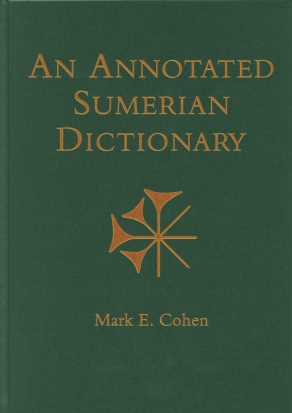
An Annotated Sumerian Dictionary
$199.95 $119.97
“Cohen’s dictionary is assuredly a large trove containing many enlightening informational nuggets that will reward those who have a love for Sumerian.”
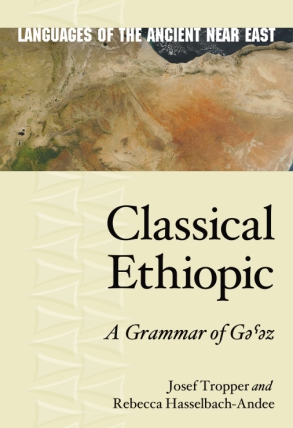
Classical Ethiopic
A Grammar of Gəˁəz
$69.95 $41.17
“For almost two decades, Josef Tropper’s Altäthiopisch has been the standard grammar for Gəˁəz. This English translation by Rebecca Hasselbach-Andee is even more useful thanks to the addition of the Ethiopic script throughout. For students and scholars alike, Classical Ethiopic is the best grammar of Gəˁəz available in any language.”
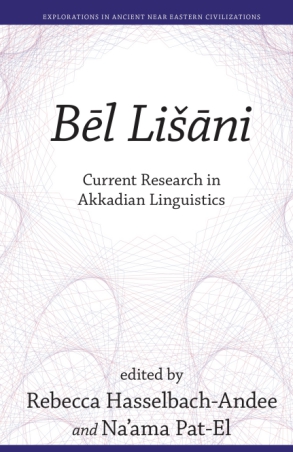
Bēl Lišāni
Current Research in Akkadian Linguistics
$119.95 $71.97
“Freshly innovative and yet traditionally rigorous. In creatively exploring still undiscovered terrains amid the vast landscape of the Akkadian language, the contributors have kept a firm grasp on the reliable maps that have been meticulously sketched by Huehnergard and other academic pioneers.”
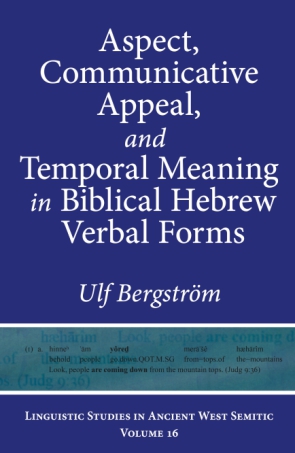
Aspect, Communicative Appeal, and Temporal Meaning in Biblical Hebrew Verbal Forms
$94.95 $56.97
“A significant contribution to our understanding of Hebrew verbal forms.”
new books
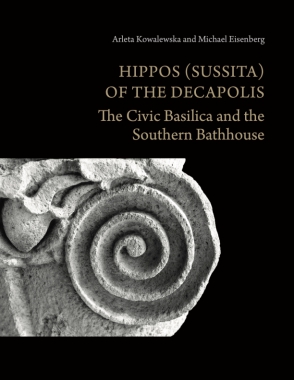
Hippos (Sussita) of the Decapolis
The Civic Basilica and the Southern Bathhouse
Arleta Kowalewska and Michael Eisenberg
“A major achievement in Classical Archaeology of the Near East. The volume presents a wealth of new data with clarity and scholarly precision, offering fresh insights into Hippos’s urban development and cultural history. Particularly striking is the Civic Basilica, whose stucco decoration makes it a unique monument in the region. With contributions by leading experts, this book is an indispensable resource for researchers and libraries alike.”
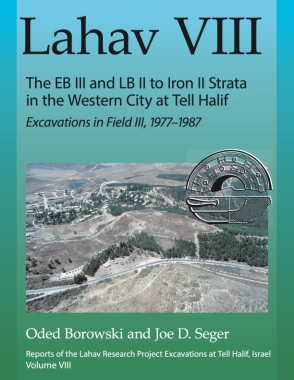
Lahav VIII: The EB III and LB II to Iron II Strata in the Western City at Tell Halif
Excavations in Field III, 1977–1987
Oded Borowski and Joe D. Seger
“While broad archaeological conclusions are important in a final report, they also become dated quickly. To present a detailed and argued stratigraphic matrix along with descriptions of what was found in most of the archaeological contexts, is the key to a successful final archaeological report that will withstand years of scholarship. What was found, where was it found, what was found with it, and in what context are the data that future researchers will seek. Borowski and Seger have provided just that.”
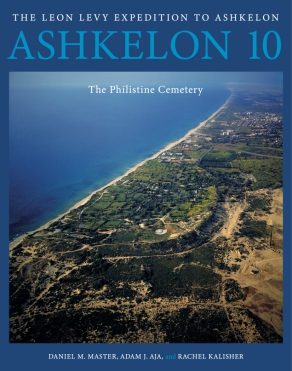
Ashkelon 10
The Philistine Cemetery
Daniel M. Master, Adam J. Aja, and Rachel Kalisher
From 2013 to 2016, the Leon Levy Expedition to Ashkelon excavated an Iron Age cemetery located immediately outside the rampart of the ancient city. This cemetery dates from the period when Ashkelon was a Philistine city, and it is the first one excavated at any of the core Philistines cities. The Philistines are known today mainly as they are portrayed in sources written by others, such as the Hebrew Bible, in stories told by their enemies. In Ashkelon 10, the Philistine story is retold using archaeological evidence. As such, the Philistine cemetery is not only an important reference for the history of the Philistines but a critical piece for understanding the broader puzzle of death and burial in the southern Levant in the first millennium b.c.
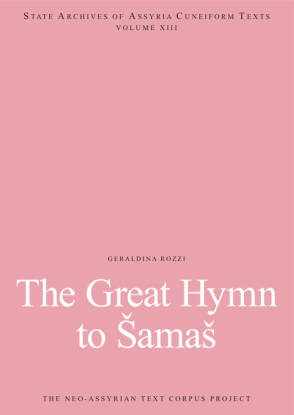
The Great Hymn to Šamaš
Geraldina Rozzi
This new and updated edition of the Great Hymn to Šamaš incorporates all the manuscripts of the Great Hymn to Šamaš discovered so far. The recent identification of numerous fragments, which were unknown at the time of the text’s first edition, has allowed for an almost complete reconstruction of the hymn that corrects previous readings and erroneous restorations. It also includes an in-depth introduction to the text, the reconstructed cuneiform text, a transliteration, and a translation by B. Foster. Additionally, this edition is accompanied by a commentary that discusses relevant philological features, along with a glossary and sign list.
journals
new from psu press
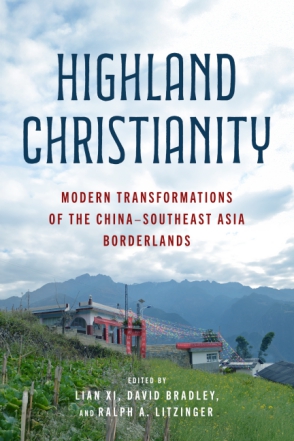
Highland Christianity
Modern Transformations of the China–Southeast Asia Borderlands
Edited by Lian Xi, David Bradley, and Ralph A. Litzinger





| Control your subscription options |