in this issue
general news
Welcome to the summer issue of Ancient News!
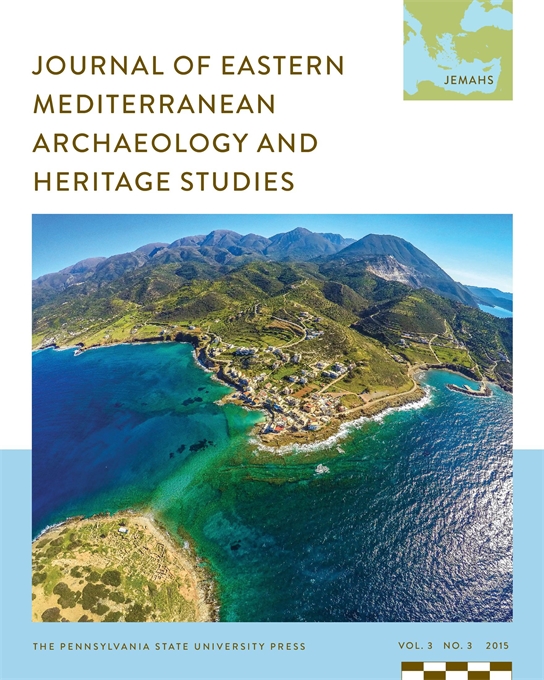
We have eight new books to highlight in this issue, including an open-access installment in the the Siphrut Series! We’re also featuring a special issue of the Journal of Eastern Mediterranean Archaeology and Heritage Studies that contains an open-access article titled “Transformation from Stone to Silicone: The Use and Reuse of Harvard’s Plaster Casts.” Scroll on to learn more!
The Hot Sumer Sale starts soon! Make sure you’re signed up for our sales notifications so that you don’t miss out.
Finally, the Fall/Winter 2026 Penn State University Press catalog has arrived! Give it a read to see what we’ve got coming from Eisenbrauns later this year.
Enjoy!
new books
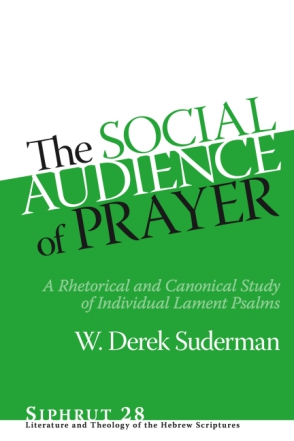
The Social Audience of Prayer
A Rhetorical and Canonical Study of Individual Lament Psalms
W. Derek Suderman
Available Open Access!
“Suderman’s monograph is a significant contribution to psalm studies. Expanding on his earlier work, he offers a compelling, book-length argument for considering not just the speaker in a psalm but also the audience being addressed. His analysis of jussive verbs is especially insightful, showing how they engage a broader social context indirectly. Rich in exegetical depth, this study is thought-provoking and well worth your attention.”
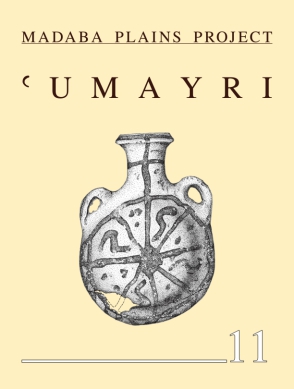
The 2008 Season at Tall al-ʿUmayri and Subsequent Studies
Edited by Larry G. Herr, Douglas R. Clark, Lawrence T. Geraty, and Monique Roddy
This volume presents the official report of the 2008 excavation season at Tall al-ʿUmayri, a key settlement for understanding the Bronze and Iron Ages in western Jordan. Part of the long-running Madaba Plains Project, it documents the discoveries, methods, and personnel of that summer’s fieldwork while situating them within the project’s broader aim of tracing cycles of growth, decline, and adaptation in ancient settlement and land use.
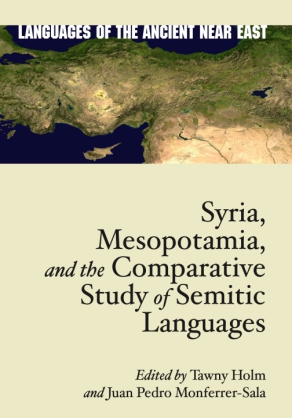
Syria, Mesopotamia, and the Comparative Study of Semitic Languages
Proceedings of the 7th and 8th Meetings of the International Association for Comparative Semitics
Edited by Tawny L. Holm and Juan Pedro Monferrer-Sala
This volume offers a wealth of perspectives on comparative Semitic linguistics emerging from the seventh and eighth meetings of the International Association for Comparative Semitics (IACS): the Madrid symposium (2016) was devoted to the role of Akkadian in the study of Comparative Semitics, and the Córdoba meeting (2019) focused on Syria at the historical crossroads of Semitic languages.
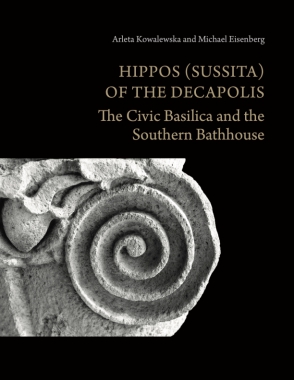
Hippos (Sussita) of the Decapolis
The Civic Basilica and the Southern Bathhouse
Arleta Kowalewska and Michael Eisenberg
“A major achievement in Classical Archaeology of the Near East. The volume presents a wealth of new data with clarity and scholarly precision, offering fresh insights into Hippos’s urban development and cultural history. Particularly striking is the Civic Basilica, whose stucco decoration makes it a unique monument in the region. With contributions by leading experts, this book is an indispensable resource for researchers and libraries alike.”
forthcoming books
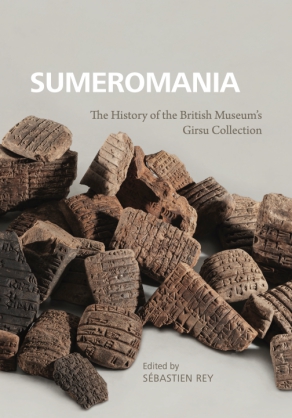
Sumeromania
The History of the British Museum’s Girsu Collection
Edited by Sébastien Rey
Sumeromania uncovers the dramatic and complex story behind one of the British Museum’s most important holdings: its vast collection of objects from the ancient Sumerian city of Girsu (modern Tello, Iraq). From statues of rulers to thousands of cuneiform tablets, these artifacts entered the museum during a period of fierce competition among empires, archaeologists, and dealers.
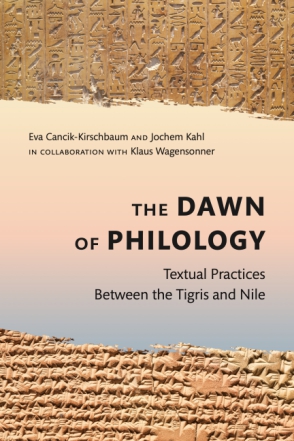
The Dawn of Philology
Textual Practices Between the Tigris and Nile
Eva Cancik-Kirschbaum and Jochem Kahl, in collaboration with Klaus Wagensonner
The emergence of complex writing systems in Mesopotamia and Egypt enabled the creation of vast textual traditions spanning administration, medicine, law, religion, literature, and political life. The preservation and transmission of these materials required highly trained specialists working within courts, temples, and other institutions. In the activities of these specialists—collecting, copying, interpreting, and curating texts—we can observe the earliest foundations of philology, the disciplined engagement with written knowledge that underlies all scholarly traditions.
From the Patriarchs to the United Monarchy
Early Israel and Its Literature, Volume 1
Nadav Na'aman
Nadav Naʾaman, Professor Emeritus of Jewish History in the Biblical Period at Tel Aviv University, and one of today’s leading historians of ancient Canaan and Israel, has published hundreds of studies and monographs in the course of an illustrious career of more than five decades. His scholarship combines biblical studies with research on geographical history, archaeology, and historiography in the ancient Near East to shed light upon the land and people of Israel in the second and first millennia BCE.
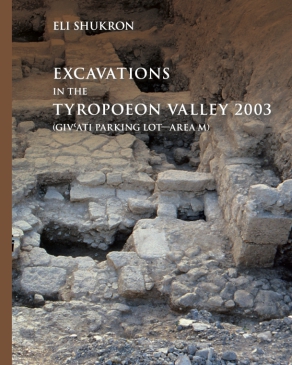
Excavations in the Tyropoeon Valley 2003 (Givʿati Parking Lot—Area M)
Eli Shukron
Excavations in the Tyropoeon Valley 2003 (Givʿati Parking Lot—Area M) marks a significant milestone in the long-standing archaeological investigation of the City of David. The excavations conducted by Eli Shukron in the southern sector of the Givʿati Parking Lot from 2002 through 2003 represent the initial phase of what would evolve into one of the most extensive and continuous archaeological projects undertaken on the southeastern slope of ancient Jerusalem.
journals
new from psu press
VIEW PSU Press News, the PSU Press newsletter






| Control your subscription options |