in this issue
general news
Welcome to the Winter issue of Ancient News!
We were glad to see many of you at MESA and AAR/SBL last month, and to celebrate Eisenbraun’s 50th anniversary with you at ASOR. If you missed us on the November conference circuit, there is still time to take advantage of our 40% off conference discount through our virtual exhibits!
The 2025 Eisenbrauns catalog has arrived! As you’re winding down for the holidays, give it a read to catch up on everything we’ve published this year.
The Penn State University Press offices will be closed for the holidays from December 24 through January 2. Thanks for reading, and we’ll see you in the new year!
Happy Holidays!
new books
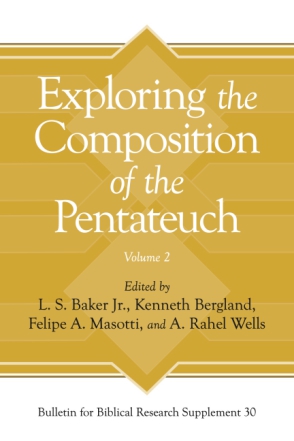
Exploring the Composition of the Pentateuch, Volume 2
Edited by L. S. Baker Jr., Kenneth Bergland, Felipe A. Masotti, and A. Rahel Wells
“This diverse collection of essays challenges both the status quo and cutting-edge theories in today’s Pentateuchal historical critical research. Its essays challenge oft unchallenged presuppositions related to the dating and literary coherence of the Pentateuch, offering a wide assortment of effective arguments engaging its non-Western literary coherence, literary reuse and dependence, ancient scribal and editorial practices, dialectical variation in diachronic linguistics, among other important topics.”
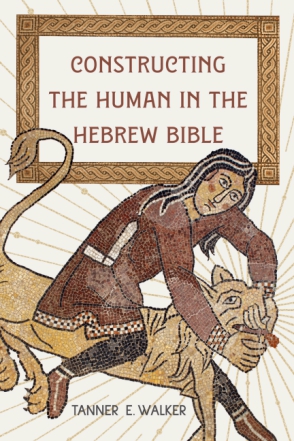
Constructing the Human in the Hebrew Bible
Tanner E. Walker
“Walker challenges scholars of the Hebrew Bible to take seriously the multiple ways these texts construct and deconstruct categories like human/animal. In the process, he provides compelling new readings of well-known biblical narratives in light of this larger question about constructed humanness.”
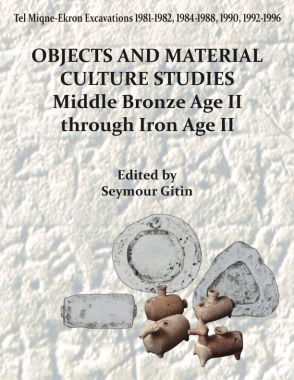
Tel Miqne-Ekron 14/1
Objects and Material Culture Studies: Middle Bronze Age II Through Iron Age II
Edited by Seymour (Sy) Gitin
This is the first of two volumes presenting the results of the analyses of objects and material culture excavated in fourteen seasons from 1981 to 1996, covering a wide range of finds from the Middle Bronze II through the Iron Age II. Chapters include studies on flaked stone assemblages; stone tools and vessels; vessel plugs, covers, and reworked sherds; weights, scale pans, and miscellaneous small stones/objects; and zoomorphic terracottas. Technical studies involve microwear analysis of flint artifacts, archaeobotanical remains, forensic analysis of last-use living surface samples, geoarchaeological analysis of the landscape, geological provenancing of grindstones and other stone artifacts, and provenancing of asphalt.
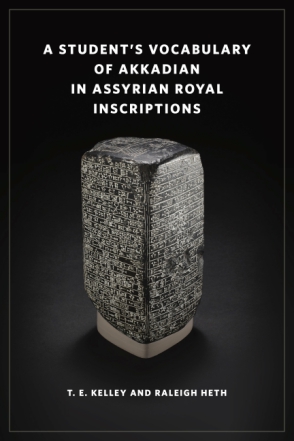
A Student’s Vocabulary of Akkadian in Assyrian Royal Inscriptions
T. E. Kelley and Raleigh Heth
“This Student’s Vocabulary offers a well-structured approach to learning and memorizing the vocabulary used in Assyrian royal inscriptions. Since it is organized according the frequency of attestations for each word, students will quickly make progress in their ability to read and understand texts from this fascinating corpus—and therefore will soon start enjoying their reading. And since the most frequently used words are also frequent in other corpora, this Student’s Vocabulary also facilitates the approach to other Akkadian corpora as well and consequently will prove helpful for any student of Akkadian.”—Frauke Weiershäuser, coauthor of The Royal Inscriptions of Nabopolassar (625–605 BC) and Nebuchadnezzar II (604–562 BC), Kings of Babylon, Part 1
award announcement
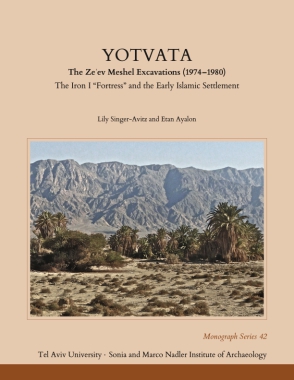
Congratulations to Lily Singer-Avitz and Etan Ayalon, the authors of Yotvata: The Ze'ev Meshel Excavations (1974–1980): The Iron I “Fortress” and the Early Islamic Settlement!
Their book was named the winner of the 2025 Hershel Shanks Award for Best Dig Report from the Biblical Archaeology Society.
According to the judges, Yotvata “sets a high standard for excavation reports” and “highlights the enduring value of revisiting and publishing earlier fieldwork.”
See the full list of this year’s BAS award winners on their website.
journals
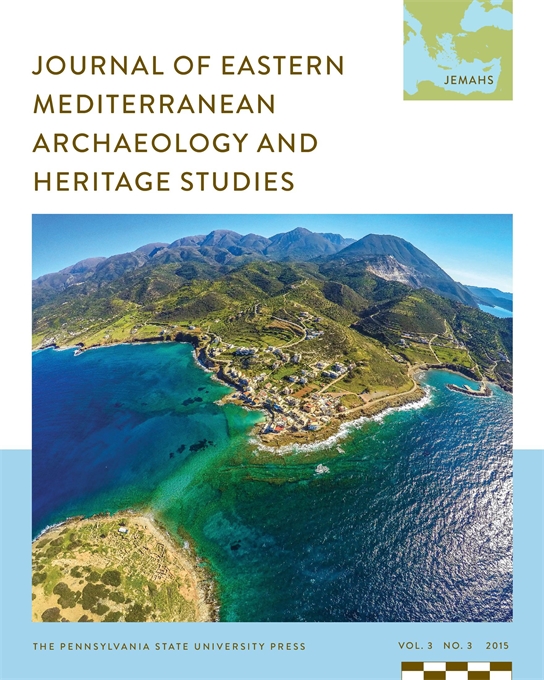
Journal of Eastern Mediterranean Archaeology and Heritage Studies (13:3) includes two open access articles!
Read “Reconstructing Historical Soundscapes: Famagusta and Its Bells,” by Michael J. K. Walsh and “The Pharmacopeia of Ancient Egyptian Alabaster Vessels: A Transdisciplinary Approach with Legacy Artifacts,” by Andrew J. Koh, Agnete W. Lassen, and Alison M. Crandall.
new from psu press
The Woman’s Messenger
Evangelical Literature and the Missionary Movement in Republican China
Yun Zhou





| Control your subscription options |