|
|
Explore a collection of Odyssey-themed journal articles, free to read through 9/15/2026. For a limited time, you can also save 50% on individual one-year subscriptions all PSU Press journals! Enter discount code 036USA250 when ordering. This special offer expires on 12/31/2026. |
|
|
|
Edith Wharton Review 35:1Maureen E. Montgomery This article offers an interpretation of Wharton’s first war story in light of classical reception studies. For many First World War writers, the classics offered a way of articulating experiences of war. To date, scholars have not yet acknowledged Wharton’s reworking of Homer’s Odyssey, the archetypal story of a soldier returning home. Montgomery argues that Wharton draws on the Odyssey to reinforce her position as an eyewitness to the war in France. She does so to enhance her authority as a noncombatant capable of producing a credible account of the war zone against the prejudices of gender and combat gnosticism.
| | | |
Comparative Literature Studies 43:3Dany Nobus From the article: “In 1907, the editorial board of Neuen Blatterfur Literatur und Kunst, a Viennese journal for criticism in the arts and humanities, invited a number of renowned intellectuals, including. . . Sigmund Freud, to compile a list of what they regarded as ‘good books’. . . Instead of immediately listing his ‘ten good books,’ Freud preferred to
contemplate first ‘the ten most magnificent works (of world literature)’ (245), whereby he started with a single name rather than a specific book: Homer. I shall demonstrate that much like Sophocles’ tragedies (especially Oedipus Rex), Goethe’s Faust and Shakespeare’s Hamlet, Homer may have featured amongst the ‘most magnificent books’ rather than the ‘good books,’ precisely
because Freud did not owe ‘part,’ but ‘all’ of his knowledge of life and view of the world to them.”
| | | |
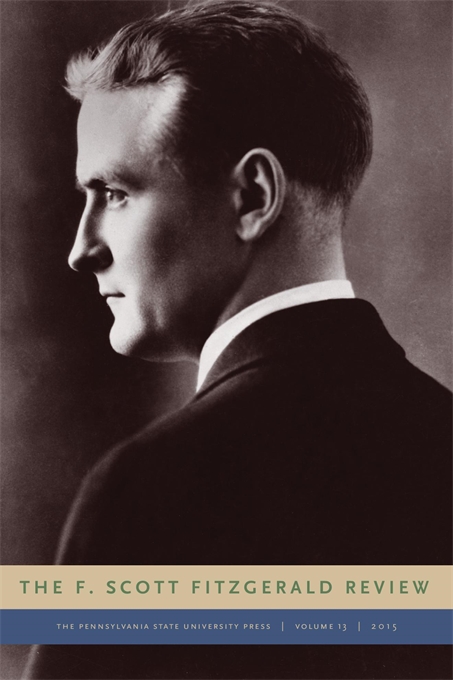
The F. Scott Fitzgerald Review 19:1Allen Ascher In May 1924, when the Fitzgeralds moved to the Riviera to complete The Great Gatsby, Fitzgerald wrote to Thomas Boyd, “I’m going to read nothing but Homer + Homeric literature—and history 540–1200 A.D. until I finish my novel, + I hope to God I don’t see a soul for six months.” Reading Gatsby in the context of the Iliad and the Odyssey reveals a number of thematically significant parallels and contrasts between Fitzgerald’s characters and the major figures in the Homeric epics.
| | | |
Preternature: Critical and Historical Studies on the Preternatural 12:2Ryan Denson Charybdis is a well-known sea monster in both the ancient and modern imaginations resulting from her prominent appearance in the Odyssey. Yet, in contrast to her counterpart across the strait, Scylla, she has been overlooked by modern scholars, and few have examined what makes her monstrous in the first place. This article argues that Charybdis should be understood as monstrous as a result of her lack of corporeality, which, in turn, also results in an ontological uncertainty about whether or not she is even a natural phenomenon or, rather, a supernatural monster. The type of fear and unease that Charybdis’s unique form of monstrosity exerts on humans can, then, be best described with reference to Mark Fisher’s concept of “the eerie” as a failure of presence where we expect it to be.
| | | |
The articles will be free to read through 9/15/2026.
|
|

22 University Dr.
USB II, Suite 112
University Park, PA 16802

|