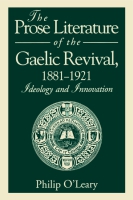




The Prose Literature of the Gaelic Revival, 1881–1921
Ideology and Innovation
Philip O'Leary
“This book is a comprehensive literary history of the Irish language movement during its crucial period—the forty years from its organization to the Civil War—with full and fairly detailed accounts of the authors and works involved. There is no available synthesis that could begin to compare with it in the scope and range of the material it covers. Hence it should fill an important need to all those who are interested in Ireland and its culture.”
- Media
- Description
- Reviews
- Bio
- Subjects
1995 Donald Murphy Prize for First Book in Irish Studies (American Conference for Irish Studies)
This book attempts to remedy that deficiency and to present the lively debates within the language movement in their full complexity, citing documents such as editorials, columns, speeches, letters, and literary works that were influential at the time but all too often were published only in Irish or were difficult to access. Cautiously employing the terms "nativist" and "progressive" for the turnings inward and toward the European continent manifested in different authors, this study examines the strengths and weaknesses of contrasting positions on the major issues confronting the language movement. Moving from the early collecting or retelling of folklore through the search for heroes in early Irish history to the reworking of ancient Irish literary materials by retelling it in modern vernacular Irish, O'Leary addresses the many debates and questions concerning Irish writing of the period. His study is a model for inquiries into the kind of linguistic-literary movement that arises during intense nationalism.
“This book is a comprehensive literary history of the Irish language movement during its crucial period—the forty years from its organization to the Civil War—with full and fairly detailed accounts of the authors and works involved. There is no available synthesis that could begin to compare with it in the scope and range of the material it covers. Hence it should fill an important need to all those who are interested in Ireland and its culture.”
“This is a major contribution to Irish Studies as well as a superb case study in the problems involved in saving and promoting a vanishing language, and encouraging literary activity in that language.”
“Taken together, this book and its companion volume [Gaelic Prose in the Irish Free State, 1922–1939] constitute a magisterial survey of Irish language prose up to the beginning of WWII. . . . The volumes belong together since the careers of many of the most important writers overlap the periods of both. . . . Libraries will want both of these splendid books.”
Philip O'Leary is Professor of English at Boston College.
Also of Interest

Mailing List
Subscribe to our mailing list and be notified about new titles, journals and catalogs.