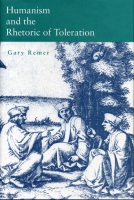



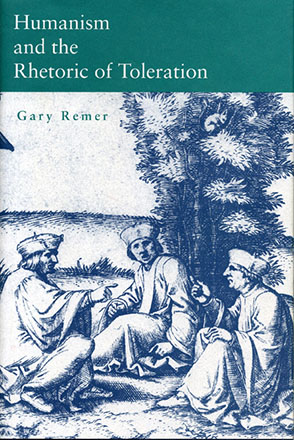
Humanism and the Rhetoric of Toleration
Gary Remer
“This is a fascinating and well-researched study of how numerous European writers from Erasmus to John Locke used the classical concept of decorum and the genre of ‘sermo’ or ‘conversation’ as opposed to ‘contentio’ or ‘argumentation’ in order to persuade their contemporaries that it was reasonable to tolerate those who practiced other religions, especially Christian religions.”
- Description
- Reviews
- Bio
- Subjects
Remer, however, offers the surprising conclusion that humanist thinking on toleration was actually founded on the classical tradition of rhetoric. It was the rhetorician's commitment to decorum, the ability to argue both sides of an issue, and the search for an acceptable epistemological standard in probability and consensus that grounded humanist arguments for toleration. Remer also finds that the primary humanist model for a full-fledged theory of toleration was the Ciceronian rhetorical category of sermo (conversation).
The historical scope of this book is wide-ranging. Remer begins by focusing on the works of four humanists: Desiderius Erasmus, Jacobus Acontius, William Chillingworth, and Jean Bodin. Then he considers the challenge posed to the humanist defense of toleration by Thomas Hobbes and Pierre Bayle. Finally, he shows how humanist ideas have continued to influence arguments for toleration even after the passing of humanism—from John Locke to contemporary American discussions of freedom of speech.
“This is a fascinating and well-researched study of how numerous European writers from Erasmus to John Locke used the classical concept of decorum and the genre of ‘sermo’ or ‘conversation’ as opposed to ‘contentio’ or ‘argumentation’ in order to persuade their contemporaries that it was reasonable to tolerate those who practiced other religions, especially Christian religions.”
“Remer has written an exceptionally lucid account of the intellectual and political tradition underlying the idea of religious toleration and the implications of that tradition for contemporary policy on free speech. . . . This wide-ranging, thoroughly researched, and systematically argued book makes an important contribution to the history of rhetoric, political theory, and Western intellectual history.”
Gary Remer is Associate Professor of Political Science at Tulane University.
Also of Interest
Mailing List
Subscribe to our mailing list and be notified about new titles, journals and catalogs.