


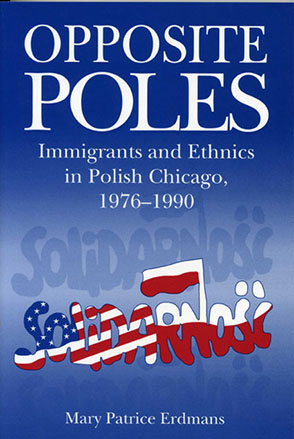
Opposite Poles
Immigrants and Ethnics in Polish Chicago, 1976–1990
Mary Patrice Erdmans
“Mary Erdmans has produced the most interesting and original analysis of contemporary Polonia. In the process, she brings insight and refinement to our understanding of immigrants and ethnics. For those seeking a more fundamental understanding of America’s cultural pluralism, her book will be most welcome.”
- Media
- Description
- Reviews
- Bio
- Subjects
Winner of the 1999 Oskar Halecki Award from the Polish American Historical Association
Erdmans's dramatic account of intracommunity conflict demonstrates the importance of distinguishing between immigrants and ethnics in American ethnic studies. Drawing upon interviews, participant observation in the field, surveys and Polish community press accounts, she describes the social differences between the two groups that frustrated unified collective action.
We often think of ethnic and racial communities as monolithic, but the heterogeneity within Polish Chicago is by no means unique. Today in the United States new Chinese, Israeli, Haitian, Caribbean, and Mexican immigrants negotiate their identities within the context of the established identities of Asians, Jews, Blacks, and Chicanos. Opposite Poles shows that while common ancestral heritage creates the potential for ethnic allegiance, it is not a sufficient condition for collective action.
“Mary Erdmans has produced the most interesting and original analysis of contemporary Polonia. In the process, she brings insight and refinement to our understanding of immigrants and ethnics. For those seeking a more fundamental understanding of America’s cultural pluralism, her book will be most welcome.”
Mary Patrice Erdmans is Assistant Professor of Sociology at the University of North Carolina, Greensboro.
Mailing List
Subscribe to our mailing list and be notified about new titles, journals and catalogs.