


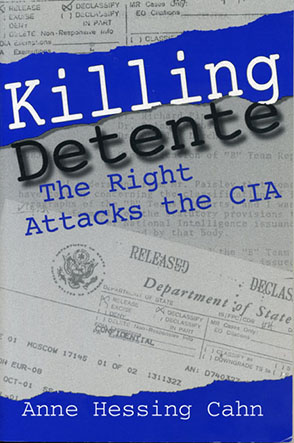
Killing Detente
The Right Attacks the CIA
Anne Cahn
“Using previously unavailable documents and conducting interviews with individuals who were personally involved in the process, the author provides an interesting perspective on the development and demise of the period of U. S./Soviet relations known as detente. Ms. Cahn first examines this period of better relations between the two superpowers during the mid-1970s. She then suggests domestic and international factors which may have led to the eventual return to the greater hostility which typified the Cold War period. While making her argument, the author provides a very informative look at the U. S. national security policy decision-making process during that time. Whether or not the reader agrees with her conclusions, there is much important information and thoughtful analysis provided. Anyone with an interest in this crucial period in history—and the people and processes involved—would benefit from reading this work.”
- Description
- Reviews
- Bio
- Subjects
In the mid-1970s a very controversial intelligence estimate was performed by people outside the government. They were given access to our most secret files and leaked their report to the press when Jimmy Carter was elected president. This study, which became known as "The Team B Report," became the intellectual forbearer of the "window of vulnerability" and led to the demise of detente between the Soviet Union and the United States. Team B was the fundamental turning point in renewing the Cold War in the 1980s. The debate over the leaked report moved the center of arms control policy strongly to the right from where it had been during the years of detente. Team B presaged the triumph of Ronald Reagan and a military buildup on a scale unprecedented in peacetime that left present and future generations with the most crippling debt in our nation’s history. This book is about attempts to destroy improved relations between the United States and the Soviet Union in the 1970s. Those opposed to the easing of tensions between the two countries used every means available, including accusing the Central Intelligence Agency of understating the threat posed by the Soviets. Charging the CIA this way seems preposterous now.
“Using previously unavailable documents and conducting interviews with individuals who were personally involved in the process, the author provides an interesting perspective on the development and demise of the period of U. S./Soviet relations known as detente. Ms. Cahn first examines this period of better relations between the two superpowers during the mid-1970s. She then suggests domestic and international factors which may have led to the eventual return to the greater hostility which typified the Cold War period. While making her argument, the author provides a very informative look at the U. S. national security policy decision-making process during that time. Whether or not the reader agrees with her conclusions, there is much important information and thoughtful analysis provided. Anyone with an interest in this crucial period in history—and the people and processes involved—would benefit from reading this work.”
Anne H. Cahn is Scholar in Residence at The American University. Holder of a doctorate in political science from MIT, she has served as Chief of the Social Impact Staff at the Arms Control and Disarmament Agency (1977–81), Special Assistant to the Deputy Assistant Secretary of Defense (1980–81), and President and Executive Director of the Committee for National Security (1982–88).
Mailing List
Subscribe to our mailing list and be notified about new titles, journals and catalogs.