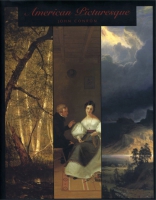




American Picturesque
John Joseph Conron
“A remarkable and masterful contribution, this book is an enlightening explication of Conron’s offer of the picturesque as the definitive aesthetic of the mid-19th-century US.”
- Description
- Reviews
- Bio
- Subjects
American Picturesque demonstrates the sweeping breadth of the concept and the specific aesthetic of the picturesque in many aspects of nineteenth-century American culture. Conron traces the picturesque through landscape, topographical, and genre painting; rural cottages and villas in styles ranging from Gothic and Italian Revival to Queen Anne; a landscape garden (Montgomery Place); a rural cemetery (Mount Auburn); a suburb (Llewellyn Park); Central Park and urban architecture; and prose narratives by James Fenimore Cooper, Henry David Thoreau, Nathaniel Hawthorne, Frederick Douglass, Harriet Wilson, Harriet Beecher Stowe, Elizabeth Stuart Phelps, and others.
Ultimately, Conron ably defines the multifaceted structure of the picturesque and establishes its influence on nineteenth-century writers and artists in various media. He also shows how the picturesque aesthetic influenced people from all walks of life in the way they perceived a painting, a woodland scene, a public park, a house, or even one another. This book will appeal to anyone interested in nineteenth-century American art, literature, or culture in general.
“A remarkable and masterful contribution, this book is an enlightening explication of Conron’s offer of the picturesque as the definitive aesthetic of the mid-19th-century US.”
“As the histories of emotions and senses become important areas of historical inquiry, Conron’s book demonstrates the value of paying closer attention to aesthetic consciousness as primary sites of feeling and essential frames of social knowledge. American Picturesque is a wonderfully rich and suggestive book.
He offers both a deft synthesis of the work of literary critics and historians of art and architecture and an inspiringly original and satisfying interpretation of aesthetic consciousness.”
“Conron is as capable in analyzing landscape painting, genre painting, urban planning, and landscape design as in discussing literary texts. The twenty-five color plates and 131 figures are essential features of a book in which verbal and pictorial vocabularies are fully integrated. All the illustrations are handsomely and purposefully presented and enhance the value of the volume for students of the picturesque in all its varied forms. Consistently sensitive to ‘the eternal picture which nature paints’ (to borrow a phrase from Emerson), Conron has produced a book ambitious in conception and scope as well as authoritative in execution.”
“Beautifully illustrated, this ambitious project to understand the nineteenth-century American ‘picturesque’ is a valuable read. A book of wide appeal to students in Cultural Studies, Art History, American Literature, and American Studies at the undergraduate and graduate level.”
John Conron is Professor of English and Adjunct Professor of Visual Arts at Clark University. His previous book, The American Landscape, was published by Oxford UP (1974).
Mailing List
Subscribe to our mailing list and be notified about new titles, journals and catalogs.