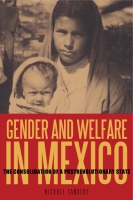




Gender and Welfare in Mexico
The Consolidation of a Postrevolutionary State
Nichole Sanders
“Gender and Welfare in Mexico connects the development of ideas about family and gender globally to the development of Mexico City's professional class and the evolution of the Mexican postrevolutionary political system in original and important ways. Engagingly written, richly researched, and rigorously argued, this book will matter deeply to anyone concerned with the history of twentieth-century Mexico and with the transnational history of gender and the welfare state.”
- Description
- Reviews
- Bio
- Table of Contents
- Sample Chapters
- Subjects
“Gender and Welfare in Mexico connects the development of ideas about family and gender globally to the development of Mexico City's professional class and the evolution of the Mexican postrevolutionary political system in original and important ways. Engagingly written, richly researched, and rigorously argued, this book will matter deeply to anyone concerned with the history of twentieth-century Mexico and with the transnational history of gender and the welfare state.”
“Placing the rise of professional women in the field of social work within an international movement of eugenics, diplomacy, and institution building, Nichole Sanders shows how it formed an integral part of the expansion of the postrevolutionary middle class and the consolidation of the PRI. Sanders considers both the social workers and the clients of social welfare and adroitly shows that if within consumer culture the chica moderna was defined as modern by her independence, within welfare rhetoric the modern woman was a scientific mother, living in a ‘properly’ formed family with disciplined children. Social workers, politicians, national and international agencies, and clients of social services come alive in this engaging history of the ever-changing relationship between public and private social assistance—a topic of seminal importance in our times.
"Gender and Welfare in Mexico engages because it examines shifts: from private Catholic charity to the rhetoric of public state-sponsored welfare; from a cardenista rhetoric that sought to protect those marginalized within capitalism to one that largely eschewed class politics in its celebration of the mother and child; from the rise of the Pan American Congress to its eclipse by UNICEF during the 1950s (in which women tended to play a lesser role); and the changing priorities of international players such as the U.S. government and UNICEF. The book breaks open the period of the 1940s and 1950s, contributing to the history of state formation, political legitimacy, childhood, family, women, and cross-class relations.
"Gender and Welfare in Mexico is an important contribution to the history of women’s expansion of their own cultural, social, and political influence prior to obtaining the right to vote. It is exciting for the way it opens up the histories of specific individuals such as Mathilde Rodríguez Cabo, Enelda Fox, and Margarita Delgado.”
“Nichole Sanders has produced a study of welfare in politics in mid-twentieth-century Mexico that places middle-class social workers and their impoverished urban clients at the center of the analysis. This important research sheds light on the ways in which international health trends and domestic political imperatives coincided, clashed, and created new opportunities for improving social conditions in the clinics, soup kitchens, and public dormitories of postrevolutionary Mexico City.”
“Through a sophisticated and consistent application of gender analysis, Sanders writes an institutional history of the SAP/SSA that sheds light on the relationships among transnational health and hygiene professionals, middle-class women, government agents, and the urban and rural poor. . . . Sanders has written a fine study that establishes clearly the importance of a single government agency in the construction of a modern welfare state, while attending to the gender politics implied in its success.”
“The historiographical significance of the book cannot be overemphasized. We are finally moving from the traditional rescuing of individual heroic female figures to the understanding of gender formation processes as a key to the interplay of power between individuals and the state.”
Nichole Sanders is Associate Professor of History at Lynchburg College.
Contents
Acknowledgments
List of Abbreviations
Introduction
1 Gender, Race, and the Pan-American Child Congresses
2 Welfare Reform in Mexico: Stabilizing the Family
3 Single Mothers and the State
4 The Postwar Years: Disease Eradication, Sanitation, and Development
5 The Rise of Social Work in Mexico
Epilogue
Notes
Bibliography
Index
Introduction
My meal—meat, fruit and pure milk—
Is very simple
But the meal never lacks something better than bread:
The tortilla.
I drink water rather than pulque,
My meals are made with clean water
And to be even more sure
I drink my water well boiled.
I like clean clothes
My underwear, my shirts
“White always, clean always”
This is the best advice.
I no longer wear huaraches
I dress my feet better now
With squeaky shoes
Which better protect my feet.
—Dr. R. Esquerro Peraza, “Yo quiero mi jacalito: Corrido Ranchero,” El Nacional, October 6, 1935
The lines above are from a corrido composed in honor of the Seventh Pan-American Child Congress, hosted in Mexico City in 1935. The corrido itself, written by a male physician, was seventeen stanzas long and was dedicated to the celebration of good hygiene. It appeared in the pro-government daily El Nacional on the first day of the conference and was one of many articles that showcased the Mexican government’s commitment to international standards for child and maternal health and welfare.
The corrido is a Mexican song roughly translated “ballad.” It is particularly telling that public health officials co-opted a genre of regional folk music to highlight the beauty of Mexican culture and emphasize national unity—a unity that transcended class differences. A tribute to the Pan-American Child Congress, Peraza’s “Yo quiero mi jacalito” also showcased Mexican participation in transnational health and welfare projects. The corrido refers to Mexican customs and practices, such as the consumption of tortillas, and (in the eyes of the reformers) Mexicans’ unfortunate propensity to drink pulque, a fermented beverage derived from the cactus. Yet it also emphasizes the ability of the Mexican people to overcome these bad habits and become part of a modern nation-state. The speaker now drinks boiled water, appreciates clean white clothes, and wears shoes, not huaraches—a sandal worn by most peasants.
Interestingly, both the author and the subject of the song are male, but from different classes. The author is a doctor, part of the professional urban class. The subject is a peasant, asked to change his “backward” ways and become more modern by practicing scientific hygiene. The habits of peasants, both those who stayed in the countryside and those who migrated to the cities, created anxiety for public health and welfare workers. They, and other social welfare reformers, believed that through the science of hygiene and public health these peasants could be redeemed and made part of the modern nation-state. What is elided, however, is the invisible labor needed to create these hygienic conditions. Women made the tortillas, boiled the water, and washed the clothes. The corrido quoted above suggests that gender discourses during this period could be complicated. Clearly, this male doctor saw men as those in need of improvement. Men would be the new citizens. Yet other reformers, both male and female, saw mothers as the conduit through which modernity could reach Mexico.
This book looks at how middle-class Mexican social welfare reformers, both male and female, used the construction of the Mexican welfare state and transnational attitudes about citizenship, motherhood, the poor, charity, and welfare to open up political spaces in which they could accomplish their goal of modernizing Mexico. Their ability to use the prestige of the Pan-American Child Congress to lobby for new policies led to the creation of the Ministry of Public Assistance (Secretaría de Asistencia Pública, or SAP) in 1937. The SAP was merged with the Mexico City Department of Health in 1943 to create the Ministry of Health and Welfare (Secretaría de Salubridad y Asistencia, or SSA). The creation of this ministry allowed both male and female reformers (doctors, nurses, social workers, lawyers, and other professionals) to work together to create what they considered a modern Mexico, in which the poor would be racially uplifted through eugenics and imbued with middle-class values. While men controlled the upper levels of power in the SAP/SSA and focused predominantly on public health initiatives, women, whether as social workers, other professionals, or volunteers, wrote and managed welfare policy for mothers and children. Understanding how middle-class professionals gained the power to intervene in the lives of poor women is crucial to our comprehension of how the Mexican welfare state, part of the “Mexican Miracle,” was formed.
The postrevolutionary welfare state reflected multiple influences: nineteenth-century benevolent programs, particularly female-headed Catholic charities, the rise of eugenics, with its focus on science and child rearing, the postrevolutionary expansion of the Mexican middle class, and transnational attitudes and ideologies surrounding twentieth-century welfare. This book examines how these influences worked together to produce the SAP/SSA and its social assistance programs in the late 1930s, 1940s, and 1950s.
The social reform movement of the mid-twentieth century sprang from the violence of the Mexican Revolution (1910–17). The revolution itself was a reaction to the policies of Porfirio Díaz, liberal dictator of Mexico from 1876 to 1910, an era known as the Porfiriato. Under Díaz, power and prestige had been centralized in Mexico City, leaving out other social and political groups. Three factions emerged during the revolution, all demanding political, social, and economic reforms, led by Venustiano Carranza, Pancho Villa, and Emilio Zapata. The armed phase of the revolution lasted until 1917, with all factions fighting for political dominance. The victors, the Carrancistas, were largely northern elites and the middle class, who greatly feared the upheaval of the revolution and the violence it unleashed. Beginning in 1917, the Carrancistas sought to rewrite the laws of Mexican society and consolidate their political control.
The Carrancistas contested the power of the Porfirian elite and sought to create a “modern,” developed Mexico. Their ally in this quest was an expanding middle class—especially middle-class professionals—that had largely been denied political and social power under the Díaz regime. The postrevolutionary government relied on a strong, centralized state and on “experts” to implement reform: lawyers drafted a new constitution and new laws, economists managed the economy, and professional social reformers sought to rewrite gender and social norms for a new society.
While doctors, lawyers, and public health officials had always enjoyed professional status, part of “updating” the welfare movement after the revolution meant professionalizing female reformers as well. A well-developed benevolent network existed during the Porfiriato, with men controlling the state apparatus while women volunteered in charitable, often Catholic, programs. By the 1940s, however, women were earning degrees in education, nursing, and social work. The professionalization of women was thus embedded within the rise of the postrevolutionary middle class, and within the ascendancy of the dominant political party to come out of the revolution, the Partido Revolucionario Institucional (PRI). To understand how the PRI maintained power and legitimacy, one must understand its relationship to the middle class, particularly the segment of the middle class dedicated to social reform.
The PRI was the prevailing political party in twentieth-century Mexico, holding power from the 1920s until it lost the presidency in 2000. The PRI began in 1929 as the Partido Nacional Revolucionario and became the party of the government, dominating popular elections and eliminating viable competitors. President Lázaro Cárdenas expanded the scope of the government and renamed the party the Partido de la Revolución Mexicana (PRM) in 1938. Under Cárdenas the PRM incorporated sectors of social movements—the Confederación de Trabajadores de México (CTM, or Confederation of Mexican Workers), the Confederación Nacional Campesina (CNC, or National Confederation of Peasants), and the Federación de Sindicatos de Trabajadores al Servicio del Estado (FSTSE, or Federation of Unions of State Service Workers). The CTM, CNC, and FSTSE also had feminine secretariats that addressed women’s issues. The incorporation of these confederations allowed the PRM to co-opt these social movements, including women’s movements, and gather political strength. The party underwent one final name change in 1946, becoming the PRI. The creation and achievements of the PRI have long fascinated scholars. This work seeks to explain the PRI’s success by examining its relationship with the social reform movement.
Reformers drew their ideas not only from their own national experience but from the international reform networks of which they were a part. While the tradition of private charitable organizations continued and grew during the “Mexican Miracle,” the expanded role of the state and its self-proclaimed goal of modernizing Mexico, which involved constructing the welfare state through the SAP/SSA, is the focus of this book. Other state agencies created social assistance programs, among them the Instituto Mexicano del Seguridad Social (IMSS), the Secretaría de Educación Pública (SEP), and the Secretaría de Trabajo y Previsión Social, but these focused either on workers or on children from all socioeconomic classes. The SSA’s welfare programs were uniquely dedicated to the poor—those left out by the other agencies. The SSA’s activities, however, should be seen against a background of many “experts” working to develop and modernize Mexico. The PRI was able to capitalize on its alliance with this group.
Many reformers, not just in Mexico but throughout Latin America, Europe, and the United States, saw the intervention of the state in welfare as the most modern and scientific way to improve social conditions. The PRI therefore gained political legitimacy from cooperating with this movement, but it was also able to draw on the international prestige and status of Mexican welfare advocates to increase its standing both at home and abroad. SSA officials invited trade groups, teachers, and other foreign experts to its new welfare centers to showcase the government’s commitment to modern scientific management of the poor. Foreign observers commented quite favorably on the new programs, and the government used their endorsement to convince Mexicans that the PRI was doing an effective job of managing the country. Mexican presidents, for example, highlighted these achievements in their speeches.
Gender, Welfare, and Transnational Influences
To professional welfare reformers, ideas about appropriate gender roles were central to modernizing Mexico. According to feminist historians such as Joan Scott, gender is a fundamental way of understanding how power works in a society. Historians of gender see it as the historically and culturally specific social construction of masculinity and femininity. Patriarchy is created through these social constructions and through the relationships between men and women. Recent scholarship has examined how those in power manipulate gender constructions in order to maintain hegemony.
Classic studies of the construction of the welfare state, such as Gøsta Esping-Andersen’s, are predicated on the understanding of citizenship as class-based and male. Gender and Welfare in Mexico builds on more recent scholarship to demonstrate that gender as a category of analysis is central to understanding the way in which welfare states have been constructed. Seth Koven and Sonya Michel outline the relationship between women’s welfare activities and strong versus weak states in their classic study of the role of maternal and child welfare policies. Susan Pedersen’s excellent work compares Great Britain and France to demonstrate both the centrality of gender in the formation of the European welfare state and how complicated gender ideologies can be. Theda Skocpol’s work on the development of the U.S. welfare state highlights the importance of treating the government as a social actor in its own right, and Linda Gordon’s study of single women and welfare shows the importance of exploring social attitudes toward the poor, poor women in particular. National studies of Latin America, such as Karin Rosemblatt’s pathbreaking book on the Chilean welfare state, Christine Ehrick’s work on Uruguay, Ann Blum’s work on Mexico, and Donna Guy’s studies of Argentina, also explore the role of gender in the formation of the welfare state.
While these studies provide useful models for comparing welfare regimes, they focus largely on the state as an entity removed from larger transnational forces. Certainly, the creation of the welfare state was predicated on the existence of a nation-state. The historiography, however, has tended to preserve national boundaries. This work builds on these excellent studies but demonstrates that it is just as important to understand the transnational focus of maternal and child welfare during this period. Welfare states were created not only because of national contingencies but also in conjunction with an international reform movement that made motherhood its central focus and had roots in the nineteenth century. Without appreciating this dimension of the modern welfare state, Mexico’s story would be incomplete.
The structural processes of industrialization and urbanization, and the social problems created as a result, sparked an international social welfare movement at the end of the nineteenth century. Reformers sought to ameliorate the most egregious consequences—poverty, urban squalor and overpopulation, child labor, and disease—and to preserve social stability. Welfare advocates participated in a variety of international meetings, conferences, and gatherings, discussing the most effective means of dealing with social problems. Latin American reformers traveled to Europe and the United States but also took part in Pan-American meetings to formulate strategies for dealing with social problems specific to Latin America. The vigorous participation of Mexican delegates in this movement reveals that international discourse about maternal and child welfare was just as important as national political struggles and ideologies in shaping the Mexican welfare state. The international was refracted through the lens of the Mexican experience, in particular the Mexican Revolution, creating a welfare policy that responded to specific Mexican realities but also had much in common with the policies of other Latin American nations. The creation of the welfare state in Mexico did not come directly out of the revolution, nor was it imposed by the PRI, but the PRI was singularly adept at capitalizing on the international influence and the regulation of gender roles that the reform movement championed.
The construction of the Mexican welfare state also responded to transnational forces, resulting in what scholars have called the “modernization of patriarchy.” Historians such as Susan Besse, Donna Guy, Karin Rosemblatt, and Mary Kay Vaughan have shown that in the twentieth century Latin American governments abandoned earlier liberal political models and moved toward stronger central states with industrial, rather than export-led, economies. The process involved many socioeconomic changes, among them changes in gender relations. With a stronger central state came restrictions on unfettered male authority in the home. Yet the result was not the end of patriarchy but its “modernization.” Women, in exchange for an improved position within the family and larger society, allowed the state to enter their homes in order to monitor motherhood and dictate appropriate behavior for mothers. Women were not to be regulated or punished by their husbands but by agents of the state, especially doctors, nurses, teachers, and social workers.
Many of the programs instituted by the SAP/SSA attempted to strengthen the male-headed family. Campaigns to promote civil marriage, the establishment of family dining halls, and the implementation of a foster-care system for orphans all sought to reinforce the family and promote a specific kind of masculinity. As Vaughan observes in the case of peasants in the countryside, reformers also wanted to create a new, sanitized form of masculinity for the urban poor that would make men into responsible fathers. Women, in exchange for some new freedoms, accepted the role of “modern” mothers, although these changes did not fundamentally challenge society’s view of women as “natural” caregivers.
Welfare professionals realized, however, that because of either death or abandonment, some households were female-headed. Many programs implemented in the 1940s and ’50s, such as mothers’ clubs and maternal and child welfare centers, specifically targeted single mothers and their children. These programs provided pre- and postnatal care as well as access to medical professionals for women and their children. They also offered training and education that allowed single mothers to work from their homes as they raised their children. If a mother had to work, they provided day-care facilities for her children. Mothers were taught gender-specific job skills (and explicitly were not trained to work in the newly emerging industrial sector). If mothers could remain in the home, the family model was preserved. To take advantage of state benefits, poor mothers had to submit to the constant scrutiny of the state in the form of social workers, doctors, and other welfare professionals. The state, with the cooperation of mothers, would raise young Mexicans to fit into an industrialized nation. In the case of single mothers, welfare policy essentially sought to replace male heads of households with state agencies. Since state policies were not designed to enable women to live or work on their own, state paternalism was strengthened and traditional gender roles preserved.
What is interesting, however, is the female face that modern patriarchy wore. While the top officials of the SSA were male, women nevertheless played an important role in the construction and implementation of health and welfare policy through both social work and voluntary committees. Professional women like Mathilde Rodríguez Cabo, Enelda Fox, and Francisca Acosta headed departments dedicated to maternal and child welfare and became a key force in writing and promoting SSA programs. Welfare workers in the field were overwhelmingly female and found their own work personally empowering and liberating, even as they promoted policies that reinforced poor women’s dependence on men. Such workers were complicit in creating a system that sought to replicate the male-headed household and reinforce gender roles within the family, even as they managed to break free of these roles themselves.
Eugenic Thought in Latin America
Social workers exploited the “science” of eugenics to promote these changes. In fact, eugenics, another transnational ideology, shaped Mexico’s national experience during this period. The delegates to the various Pan-American meetings were influenced by both their own anxieties about gender and race and their understanding of racist attitudes toward Latin America in the United States and Europe. As we will see in chapter 1, Latin American reformers in the 1930s saw the implementation of welfare policy as a marker of culture and progress, and they couched their reforms in terms of a “civilizing mission.” Social activists believed that their countries were racially unfit and socially backward. In order to “uplift” their people and achieve “progress,” programs were needed to educate and train children, whom welfare specialists considered the future wealth of their nations.
Latin American policymakers were well aware of their economic disadvantages vis-à-vis more developed nations, and also of their racial difference from those nations. Latin American elites knew that most Americans and Europeans considered them racially inferior—and many agreed, contending that the racial makeup of their own countries retarded their development. Plans to “whiten” their populations through European immigration at the turn of the twentieth century gave way to an emphasis on eugenics in the 1920s and 1930s. Eugenics was a popular concept in Europe and North America as well, but it took a different form in Latin America.
Latin American elites embraced a neo-Lamarckian version of eugenics, which stressed the primacy of environmental factors and held that changes in environment could improve “the race.” This represented a departure from the Mendelian form of eugenic thought popular in the United States, England, and Germany, which favored a more deterministic theory of genetics, arguing that genes or “germ plasm” passed unalterably from generation to generation. Public health became important to Latin American eugenicists because it offered a positive way for their societies to become racially “civilized” that stood in contrast to “negative” North American and German sterilization policies.
Through the discourse of eugenics, the poor became associated with racial inferiority rather than, as in the past, with suffering and with receiving their reward in heaven. As Nancy Leys Stepan contends, “these professionals assumed that social ills accumulated at the bottom of the racial-social hierarchy—that the poor were poor because they were unhygienic, dirty, ignorant, and hereditarily unfit.” Any attempts to combat poverty during this period revealed not only class bias on the part of reformers but racial bias as well. Mexican professionals often conflated social class and race. As the historian Karin Rosemblatt notes in her discussion of Mexican social scientists during the same period, “Class distinctions increasingly replaced, but also subsumed, racial distinctions in Mexican social science. Scholars considered poverty and economic deprivation as racial conditions and believed that economic uplift would do away with racial inequality.” Reformers saw eugenics as a scientific way to “uplift” the poor racially.
Eugenics in Mexico can be seen as part of postrevolutionary state building. Mexican eugenicists emphasized the importance of motherhood, sexuality, and children to the national project of modernization. “Echoing French eugenicists,” writes Alexandra Minna Stern, “Mexicans embraced puericulture, ‘the scientific cultivation of the child,’ and advocated a pronatalism tempered by biological selection.” Reformers believed that syphilis, alcoholism, tuberculosis, and other diseases had direct hereditary effects. Educational measures such as classes in puericulture (the science of child rearing) and other public health programs were thus essential if Mexico was to modernize and join the march of progress. Policymakers maintained that Mexican industries needed vigorous, healthy workers, and mothers had to be trained to raise their children appropriately, so that they could fill this need. Eugenicists’ idea of “responsible motherhood” meant that mothers had to learn to avoid vice and disease so that they would not pass these handicaps on to their children genetically.
Eugenics offered Mexican and other Latin American elites a “scientific” way to reshape their populations and redefine citizenship along specific gender and racial norms. Eugenicists focused on reproduction and socialization, thereby increasing the importance of mothers and children to rapidly modernizing societies. As Stern points out, “This historical transformation entailed more than just a reinscription of a traditional, patriarchal view of women as caretakers—at stake was the rearticulation of all points of power within the domestic domain. Only such intimate contact could construct modern citizens and recompose existing ones.” The changes in Mexico and Latin America reflected a global movement toward the reform of gender relations in the interwar years. Eugenics rewrote power relations within the family, giving mothers a vital role in the construction of modern nation-states. The centrality of motherhood challenged the ultimate patriarchal authority of the father, but, as noted above, it did not fundamentally challenge patriarchy, since male power within the family was transferred to the state, embodied by the predominantly male medical establishment.
Welfare Reform in Mexico
The Mexican social reformers who worked at the SAP/SSA were well schooled in the “science” of eugenics, and by the 1940s and 1950s had participated in transnational welfare networks for almost eighty years. The 1917 constitution contained social welfare provisions; article 27, part 3, for example, established state control over public and private benevolent organizations, defining benevolence broadly to include scientific investigation and education. It limited benevolent organizations’ accumulation of funds and property and prohibited them from being administered by religious institutions. Article 73 created a public health authority (the Consejo de Salubridad General) that was to be controlled directly by the president. In many ways, as Mario Luís Fuentes observes, these articles merely ratified key aspects of the Ley Reforma—a period of liberal reform in mid-nineteenth-century Mexico. But they also point to the importance of social health and welfare policy to revolutionary leaders. The Mexican Revolution and the subsequent consolidation of state power in the 1920s and ’30s meant that reform efforts were often couched in the language of social justice. By the 1940s (the beginning of the “Mexican Miracle”), however, the relative importance of social justice gave way to an emphasis on economic development, political stability, and modernization.
The story of the Mexican Miracle itself is a familiar one. In the late 1930s the Mexican government shifted from a policy of economic redistribution to one of state-sponsored industrialization. Politicians and government economists believed that the best hope for social justice lay no longer in agrarian reform, as it had in the 1930s, but in economic growth. It was necessary, that is, to create wealth before it could be redistributed. It thus became government policy to support industrial development through the policies of “import-substitution industrialization” (ISI). The Mexican government reasoned that the economic situation created by World War II was ideal for implementing this new policy. The economy of the United States, Mexico’s largest trading partner, was tied up in war production and needed to import both agricultural and manufactured goods from its neighbor to the south. The result was an expansion of Mexico’s manufacturing base, the growth of both the working and the middle classes, and increased urbanization. Growth rates averaged almost 6.5 percent per annum, and the PRI became the single most powerful political party in Mexico. The combination of political stability, PRI dominance, and economic growth gave rise to the term “Mexican Miracle” to describe the period from the mid-1940s through the early 1970s.
Political commentators have debated the nature of the PRI’s role in Mexico’s economy. Scholars such as Roger Hansen and William Glade, writing primarily in the 1960s, applauded the PRI’s successful interventionist model, which led to extraordinary growth rates. The 1970s saw a shift to a revisionist view that critiqued the PRI and its policies as a betrayal of the revolution. Political economists charged that the PRI’s interventions during the years after World War II were responsible for the economic crises of the 1970s and 1980s. Many also criticized the PRI for abandoning the goal of social justice, some questioning whether the PRI had ever really been committed to uplifting the poor. More recent literature has tried to substantiate or refute this claim by examining the government’s relationship to different social groups. The SAP was created during a period of growth in both state and private initiatives to combat poverty and modernize Mexico. State initiatives (in addition to the SAP) included not only the creation of the IMSS, or the Mexican Social Security Institute, but other measures designed to help workers, such as protective legislation, the construction of public housing, and food subsidies. These measures, however, specifically targeted workers rather than the poor in general.
Labor historians have spilled a great deal of ink looking into the connection of the PRI to organized labor in an attempt to evaluate the ways in which the PRI gained political legitimacy. Kevin Middlebrook, for example, has examined the relationship between organized labor and the state and the role it played in the long tenure of the PRI. He argues that “economic growth produced new sources of employment. . . . Active state regulation of economic affairs and an expanding public sector made it easier for major labor organizations to translate their political importance into social and economic policy gains.” Labor historians like Middlebrook have argued that political stability during this period came in part from the strong relationship between the state and organized labor. Because the state supplied social programs such as the IMSS, housing, and food, stability was possible and organized labor reaped the benefits.
Other labor historians, while not denying the importance of the state, have examined the ways in which workers interacted with industrialists and with labor unions themselves during the twentieth century. Historians such as Susan Gauss and Michael Snodgrass have looked at how paternalistic businesses provided social welfare provisions for employees. Companies supplied housing, schools, and leisure activities, just as the government did. These historians have also explored the gender relations embedded within these paternalistic relationships. Clearly, welfare during this period came not from state programs alone and was targeted not only to male workers. Industrialists, unions, and private charities sought to provide welfare, thus attempting to rewrite gender norms in order to promote social stability.
This development took on added significance during the period of the Mexican Miracle. World War II sped up the processes that had begun before the Mexican Revolution. The migration of peasants into cities, combined with the economic retrenchment of the 1930s (caused by the Great Depression), created wider-scale, more visible poverty in the cities, particularly Mexico City. President Lázaro Cárdenas created the SAP in 1937 to centralize a hodgepodge of commissions and boards established by postrevolutionary administrations. The agency’s mission was to protect “our country’s inhabitants from social weakness, particularly economic weakness. The goals are to prevent, mitigate, or cure this weakness by attempting to integrate, reintegrate, or maintain as active elements of production and consumption suffering individuals, [so that] they can enjoy the best welfare possible.” The SAP’s purpose, in other words, was to integrate marginalized populations into Mexican society.
The SAP was never the largest or the best-funded government agency, however. Scholars have downplayed the PRI’s commitment to welfare during this crucial period of state formation because government expenditures for social assistance spending never represented a significant portion of Mexico’s federal budget. In 1938, according to James Wilkie, 4.9 percent of government spending under Cárdenas, or 3.1 pesos per capita, targeted public health, welfare, and other assistance. By 1958 the total percentage of this assistance had fallen to 3.3 percent of the budget, although per capita spending had increased to 5.8 pesos. This was more than the IMSS received—0.7 percent of the federal budget, or 0.8 pesos per capita in 1945; those figures increased to 1.7 percent of the federal budget and 3.5 pesos per capita in 1958. Moreover, most of these expenditures were concentrated in Mexico City; by 1950, 80 percent of SSA spending targeted Mexico City, where 12 percent of the country’s population lived but where the urban poor were most heavily concentrated and were the greatest threat to the PRI’s political power.
Yet scholars have failed to appreciate that the SSA, despite its limited budget, continued to expand programs and services throughout both Mexico City and the entire country between roughly 1934 and 1963. The number of shelters, dining halls, public bathrooms, day-care centers, workshops, food and clothing distribution centers, and other forms of aid increased from a total of twenty-three in 1936 to 186 in 1963 (although the rate of increase was irregular). The number of hospitals, asylums, and rehabilitation centers increased as well, from 803 in 1934 to 1,671 in 1961. The number of privately run shelters and charities also increased during this period, calling into question some historians’ assertion that the revolution died in 1940. In fact, it was the role of private investment that allowed for this expansion: after 1940, the Mexican government successfully co-opted many formerly private charitable endeavors (many of them headed by women and rooted in the Porfiriato) and redirected their energies toward SAP (after 1943, SSA) agencies and programming. Scholars have thoroughly examined the relationship between private investment and ISI in the consolidation of the Mexican Miracle. But they have not looked at how private contributions also allowed for the expansion of social assistance that bolstered the PRI’s power.
Their focus on the relative lack of government expenditure has also allowed scholars to overlook the social significance of the SAP/SSA. Historians are only now beginning to study the issue of how government work opened new avenues for female employment during this period. Susie Porter has shown how debates about the nature of office work, particularly government work, affected middle-class values and practices. This study builds on Porter’s work by showing that the SAP/SSA was not just an agency where women could work as typists or clerical help: women in this agency held management positions and wrote social assistance policy.
In 1938 the SAP employed about 5,230 workers, 57 percent of whom were women. The secretary and various subsecretaries of the agency were men. In fact, in the 1938 labor census, men outnumbered women in the SAP’s administrative category (483 versus 402), professional category (438 versus 110), and worker category (364 versus 102), although women outnumbered men in the “especialista” (specialist) category (291 versus 1,192) and “servant” category (672 versus 1,176). Interestingly, 54 percent of all women employed were single, making single women 31 percent of the total SAP workforce.
Subsecretaries oversaw a number of SAP departments, and it is at the departmental level that women exercised influence. The departments dedicated to maternal and child welfare were renamed and reorganized several times over the twenty years examined in this study, but many department heads were women, among them Mathilde Rodríguez, Enelda Fox, and Francisca Acosta. SAP programs were created and supervised at the department level, and department heads managed staffs of social workers, volunteers, and clerical help. The department heads reported directly to the subsecretaries, but they also had access to the head of the agency himself, and in many cases they dictated terms to their supervisors. This agency allowed these female department heads considerable power and autonomy, markers of middle-class status. Their work in the SAP, and later in the SSA, allows us to understand the relationship between women’s professional work and middle-class femininity during this period more fully.
The Middle Class
Political scientists have debated the centrality of middle-class support in the creation and maintenance of political regimes in Latin America. Peter Smith, for example, argues that political legitimacy derives in large part from the support of the middle sectors of society. D. S. Parker argues convincingly in his study of Peru that the middle class is less a strict economic category than a contested social (or socioeconomic) identity. Soledad Loaeza makes a similar claim about the middle class in Mexico. Anne Rubenstein argues that discourses of traditional versus modern in the postrevolutionary era often centered on women, particularly the idea of the chica moderna and her relationship to new modes of consumption. Rubenstein points out that these discourses were defined in relation to each other; the traditional informed the modern and vice versa, and both helped define appropriate behavior for the emerging middle-class women.
The existence of the middle class was contested, gendered, and of central importance to the PRI’s political consolidation. Ideas of what it meant to be middle class were in flux during the 1930s, ’40s, and ’50s, as a new modernization project changed the way wealth was created and distributed in Mexico. As Julio Moreno argues in Yankee Don’t Go Home, consumption became an important marker of middle-class status during this period. Participation in the construction of the welfare state was a marker as well, one that has not been adequately addressed.
What was considered appropriate middle-class behavior? What did it mean to be “middle class” in Mexico during the 1940s and ’50s? Attitudes toward class and social status are notoriously difficult to define because they are constantly changing. Status means different things to different people. As Rubenstein and Moreno point out, consumption—the ability to purchase consumer goods—was one indication. William French argues in A Peaceful and Working People that for the gente decente during the Porfiriato, manners and morals mattered; that is, the ability to play certain social roles was what marked one as part of the middle class. Loaeza and Porter also contend that education and the ability to practice a profession also helped define the Mexican middle class.
Social reformers were well educated and considered themselves professionals. Their writings reveal that they valued education, science, and the law, the tools with which they aimed to modernize Mexico. They defined themselves against the people they worked with, and they saw the poor as uneducated, superstitious, and lawless. But part of what differentiated the middle class from the poor was the power middle-class reformers had, through the state, to intervene in the lives of the poor. This social power, I argue, came in part from the social prestige of the “charity ladies.” That is, middle-class women and the state drew on the prestige conferred by women’s traditional participation in charity work to encourage women to work for the new ministry. Their position allowed them not only to be middle class but also to define what they considered appropriate middle-class behavior and standards for their clients. But because the language that emerged during the Mexican Miracle emphasized welfare as modern, scientific, and professional, women felt that they were also taking part in the construction of a new society. They either became middle class or used their new roles to bolster their middle-class status. In many ways, the new middle-class professionals also defined themselves against the Mexican upper class. The revolution did not destroy the Porfirian elite, but the new Mexican government did seek to curb their economic and social power. Middle-class reformers’ criticism of religious charities can be read as a critique of the elite and their approach to poverty. If the elite were wedded to tradition, then this new professional class would be part of the modern construction of Mexico—a revolutionary Mexico. This new professional class saw women as key to creating this new, modern nation, but, ironically, their view was rooted in the Mexican reform tradition that they fiercely derided.
The Nineteenth Century: Gender, the Poor, and Catholic Social Action
Mexicans had long held the belief that women were particularly suited for welfare work because of their “natural” moral superiority and inherent maternal characteristics, which some scholars have termed “benevolent femininity.” Indeed, this form of maternalism became an important rationale in many parts of the world for elite female activity and political participation. In Mexico, Catholic social action bolstered this view, both before and after the revolution. The anticlericalism of the revolution tempered but did not eradicate this discourse. As Karen Tice explains, “As with many facets of reform practice and thinking, however, benevolent femininity did not simply disappear. It co-existed in a variety of transmuted forms embedded in ascendant scientific and professional discourses.” Attitudes toward social reform after the revolution reflected the influence of these new professional and scientific discourses, pairing these discourses with older attitudes regarding appropriate professional activity for women. Social work therefore emerged as a professional field believed to be particularly suited to women because of commonly held assumptions about “benevolent femininity.”
Pamela Voekel argues convincingly in Alone Before God that attitudes about liberal modernity in nineteenth-century Mexico had their roots in Catholic ideology, although liberal discourse was officially anticlerical. I contend that these attitudes persisted after the revolution as well. Official state rhetoric was anticlerical, especially in the 1930s. Welfare workers criticized religious charity as backward and old-fashioned. And yet, as Tice explains, the discourse of benevolent femininity, which helped to justify women’s participation in professional welfare work, was embedded in the new welfare state. Catholic social action, which sought class harmony, also shaped postrevolutionary reformers’ attitudes about the poor. While the rhetoric of the Mexican Miracle differed from that of the Porfiriato—the poor needed to be uplifted and integrated rather than encouraged passively to accept their fate—the belief that poverty undermined the modern state persisted. Postrevolutionary modernity was tied to industrialization, consumption, and control of the violence that erupted during the revolution. Welfare workers contributed to the construction of the “new” Mexico, but the nineteenth century’s gendered understanding of the poor, women, charity, Catholicism (particularly the late nineteenth-century Catholic social action), and the role of the government shaped twentieth-century welfare practices.
In 1877 Porfirio Díaz had federalized welfare by placing administration of the Junta Directiva de Beneficencia Pública under the Secretaría de Gobernación. In 1881 a new law grouped government benevolent organizations into three categories: hospitals, shelters, and centers of education and correction. Thus recipients of state aid were either the sick and infirm or those otherwise in need of state protection: the indigent, orphans, the mentally ill, juvenile delinquents, and pregnant women. State paternalism was therefore an important ideological underpinning of the provision of welfare. As article 49 of the law stated, state institutions existed for those who “really needed help and would be free only for those truly indigent.” The truly deserving poor would get help, but others were expected to take care of themselves.
Government officials and the middle and upper classes alike, however, viewed poverty as a social ill that had to be controlled rather than eradicated. Upper-class women focused their efforts on poor women, especially poor mothers, in order to guarantee the health of Mexican children and families. A growing middle class allowed these women to perform charitable activities as well.
Porfirian reformers, then, secularized the welfare system and placed it under federal control; but a system of private charities, under federal supervision, also emerged in the late nineteenth century. The private charities, dominated by women, were primarily religious in nature and responded to the call to take part in benevolent work issued in the papal encyclical Rerum Novarum. The expansion of elite women’s charitable activities had steadily gained acceptance throughout the nineteenth century and took on increased momentum under Porfirio Díaz’s liberal regime. Pope Leo XIII’s call for social action inspired many Porfirian women and served as a continued justification for their work. This work aided the construction of the Porfirian state—a balancing act between public programs and private works. Both networks were influenced by transnational currents in welfare reform; Catholic charities in particular were influenced by social Catholicism.
Rerum Novarum addressed the social question created by the modern capitalist system and the egregious effects of industrialization. The encyclical delineated the forms of exploitation suffered by the working class. It was suffering, the church argued, that made capital accumulation possible. The encyclical also criticized “rich and opulent men” for ignoring their charitable duty. Although it defended the working class, it fiercely decried socialism and firmly defended the right to private property. Essentially, the encyclical sought to promote class harmony and conciliation. It exhorted the rich to treat the poor as human beings, not slaves—they should be paid a living wage, for example. The rich should also pay more attention to social justice and charity work. The poor, for their part, were admonished to accept their humble social position. If all classes followed these recommendations, the result would be “true brotherly love.” Rerum Novarum, then, did not recommend fundamental changes to the capitalist system; it saw the solution to social unrest and other ills of industrial capitalism as cooperation between the classes, each playing its part and treating the other fairly. If the rich would commit themselves to ameliorating the most egregious excesses of the capitalist system, and the poor learned to accept their “place,” all would be well.
Rerum Novarum built upon the Latin American elite’s interest in charity and welfare by advocating a particular form of social action. Charitable work gave elite and middle-class women an opening for greater participation in the public sphere. Church congresses between 1903 and 1909 outlined plans for this kind of participation, specifically the “formation of Catholic worker circles; increased Catholic presence in education; promotion of wages which would allow men to support their families; primary education and ‘moral’ leisure activities for the working class; and dignity for the home, family and children.” The Catholic congresses, which were attended by women as well as men, promoted temperance, campaigns to legitimize marriages, greater protections for women (including “fallen” women) and orphans, and educational reforms, particularly for servants. Women’s roles in Catholic charities increased not only in Latin America but in European Catholic countries as well. Conferences in European and Latin American countries provided women an international context for their activities in Mexico. The ability of social reformers to draw on international contacts gave the reform movement, especially female reformers, a certain prestige. These contacts remained important after the revolution, as the postrevolutionary state and the middle class sought legitimacy.
Middle-class attitudes toward the poor and working women helped shaped the particular contours of welfare in Mexico, both public and private. As Susie Porter has demonstrated, by the 1880s industrialization had made working women more prominent in Mexican cities (especially Mexico City), and their presence produced anxiety among the middle class. Positivists like Horacio Barreda equated working women with the disintegration of the home and the disruption of class relations. Middle-class reformers saw motherhood as the true calling of respectable women, and benevolent activity was largely designed to help poor and working women become better mothers. Charitable work also gave middle-class women an aura of respectability; formerly an elite activity, it was now open to middle-class women as well. The growth of government welfare services also gave newly professional men a venue for their activities. In sum, the expansion of welfare, through both religious charities dominated by women and state-run agencies dominated by male doctors, sociologists, and other professionals, helped define a new middle-class identity, a trend that continued in the 1940s and ’50s.
While male officials remained largely in charge of the public welfare system throughout the Porfiriato, private benevolent organizations, especially those run by elite women, undertook many important charitable projects. Mexican women’s charitable organizations never had the direct political power that their counterparts in Argentina did, but they still exerted a strong social influence. Prominent elite women such as Carmen Romero Rubio de Díaz, Porfirio Díaz’s wife, played a large role in creating and sponsoring welfare projects. In 1887, for example, Rubio de Díaz founded the first Casa Amiga de la Obrera, a day-care center modeled on European kindergartens for the children of working mothers. She was also the honorary patron of the seamstresses’ society, the Sociedad Fraternal de Costureras. Rubio de Díaz remained active in benevolent activities throughout her life, indeed, even in death. In 1941 she left five thousand pesos to the SAP, stipulating that the money be used to help fund improvements to the first Casa Amiga de la Obrera, which she herself had founded more than fifty years before.
During the Porfiriato the number of charitable organizations founded and administered by women for women and children grew. They included such institutions as a branch of the U.S.-based Florence Crittenden homes, as well as shelters and mothers’ clubs designed to educate poor and working-class women in the latest child-care methods. Another important group was the Union de Damas Católicas Mexicanas, which was made up mainly of upper- and upper-middle-class women and was dedicated to Catholic charity. The group also offered a vision of what it considered “reasonable” feminism. The Damas Católicas believed that women had a moral obligation to work for the improvement of society and that this obligation transcended their religious and domestic responsibilities. In order to improve the lives of the poor, particularly poor women and their children, the Damas created centers that offered training in job skills, catechism classes, and even unionizing activities.
Catholic charitable work, directed primarily at poor mothers and their children, allowed elite women to argue that their public activities were extensions of their roles as mothers. This “benevolent femininity” shaped many of the discourses surrounding the poor and social welfare after the revolution. In fact, many of the issues and concerns discussed by the Damas Católicas and the Catholic congresses became part of the rhetoric of the revolution and were incorporated into the 1917 constitution.
As noted above, the welfare system that emerged from the revolution had its roots in nineteenth-century liberal ideology and Porfirian attitudes toward the poor. Postrevolutionary governments maintained state-run programs and continued to regulate private charities. Many private entities founded during the Porfiriato, such as the Casas Amigas de la Obrera and mothers’ clubs, day-care centers, and school breakfast programs, continued to function after the revolution but were now administered by the government. While the Porfirian state-run public school system and other public institutions preached messages similar to those of the religious charities, it is significant that many of the religious programs were adopted wholesale by the postrevolutionary regime. Benevolent femininity did not disappear, but it became part of a new, postrevolutionary discourse.
Overview of the Book
This study relies heavily on the documents left behind by the men and women who worked in the SSA and on newspaper articles and licenciatura theses written by social workers studying at the national university, the Universidad Nacional Autónoma de México (UNAM). The voices of a relatively small group of people inform our understandings of gender and welfare during this period in Mexico. As these were predominantly educated professionals, they tell us more about the construction of a middle-class identity in Mexico, and the relationship of middle-class reformers to the government during this twenty-year period, than they do about the recipients of state welfare, the clases populares, and their understanding of citizenship and welfare rights. Where the documents permit, I have included the voices of the poor and their reactions to SSA programs. But these voices are almost always mediated by the voice of an SSA worker or volunteer.
Because the SSA memos, reports, and program descriptions on which this book is based are largely institutional, I have tried to look at other types of documents as well. The institutional reports tell us about the SSA programs that were implemented, but they do not tell us much about reactions to the programs, either from program participants or from the welfare workers “on the ground.” I have thus supplemented these documents with a few letters in the archives and the writings of the social workers themselves. Sometimes social workers included their personal views in official reports; their academic theses also provide glimpses into how they saw their role in the welfare apparatus. Newspaper articles and editorials have also provided insight into attitudes toward SSA programming.
I relied as well on the official SAP/SSA monthly periodical—published either as Asistencia Social (social assistance) or simply Asistencia (assistance, or welfare)—which was distributed to SAP/SSA workers and other interested parties; the agency estimates that twenty-five thousand copies were distributed each month, beginning in the late 1930s. The periodical featured articles, primarily but not exclusively by SAP/SSA workers, on agency programs, public health, child nutrition, welfare initiatives in other countries, and so on. It was an important source of information for welfare workers and also a means of publicizing the work of the agency. Many copies went to government agencies outside Mexico City.
This book focuses on the social welfare activities of the SAP/SSA, predominantly in Mexico City and primarily in the areas of maternal and child health and welfare. As such it does not attempt to offer a comprehensive overview of SAP/SSA activities. I focus on Mexico City because the vast majority of SSA funds were spent there, and because SSA workers considered Mexico City an example for other Mexican cities and states.
Chapter 1 looks at the Pan-American Child Congresses as significant arbiters of international discourse on maternal and child welfare. These congresses were certainly not the only international efforts dedicated to this issue, but they held great importance for the Mexican reform community, and Mexicans were able to use the prestige of this forum to showcase their reform efforts and press for more support and funding. As Donna Guy notes, social reformers capitalized on the momentum created by the child congresses to implement welfare policies in their home countries. “Often, these formal, highly public and erudite ceremonies served as a legitimating function for intellectuals and politicians endeavoring to create political consensus on social topics,” she writes. “Both before and after the Congresses—advocates used professional authority to pressure political systems for reform.” The opening chapter focuses on the Seventh Pan-American Child Congress, held in Mexico City in 1935. It also looks at the eighth congress, held in Washington, D.C., in 1942, where the Mexican delegation was the largest foreign delegation to the congress. This congress is important because many of the programs discussed there became models for Mexican programs by the end of the 1940s.
Chapters 2 and 3 examine how the international discourses of the Pan-American Child Congresses intersected with Mexican realities in the late 1930s and 1940s to construct social assistance programs in Mexico City. These chapters look at how reformers like Mathilde Rodríguez Cabo, Enelda Fox, and others who attended the congresses translated ideologies into practical programs for poor families and single mothers. These programs were meant to create strong Mexican families and help mothers raise their children in a modern, scientific manner. These chapters also examine how discourse about the poor shifted from seeing the poor as a class in the 1930s to emphasizing mothers and children in the 1940s and ’50s.
Chapter 4 turns to the Ninth Pan-American Child Congress and the creation of Unicef and looks at how international discourses and standards influenced Mexican welfare in the 1950s. One important shift was a renewed emphasis on rural welfare, and changes in approaches to the countryside spurred by postwar discussion of maternal and child health and welfare. This chapter also examines how the PRI used the prestige of welfare to gain political ascendancy.
Chapter 5 looks at the development of social work as a career dominated by women—its intellectual roots, transnational influences, and the way in which Mexican social workers understood their role in the construction of a postrevolutionary state. It also looks at how professional social work influenced the construction of middle-class identity and how notions of benevolent femininity fit into this construction.
The Mexican Miracle did not end poverty, leading many to question the efficacy of state-run programs. If we look at welfare in strictly class-based economic terms, such questions appear to have merit. The use of gender as a category of analysis, however, allows us to complicate the question. Professional welfare workers trained poor women to aspire to middle-class standards. Job training (albeit for very specific types of jobs) and the provision of day-care centers gave poor women a conduit into the middle class. Many social workers themselves came from working-class or lower-middle-class backgrounds and used the professional status that social work bestowed to ascend more firmly into the middle class (see chapter 5). Thus, although the welfare state did not eradicate poverty, it nevertheless contributed to the growth and strength of the emerging middle class, a group of vital importance to the PRI.
Social welfare policy in Mexico reflected the vision and determination of largely middle-class reformers. The government pointed to the significance of the middle class when the president of the Mexican Congress declared that it was of great importance to “the social fight.” Reformers used maternal and child welfare in part to gain political power, through the newly created SAP, but also to advance their social goals. This book examines the reformers’ beliefs and politics, as well as the major programs they established in the 1930s and ’40s, and shows how those programs sought to inculcate in the poor not only middle-class values but an ethic of consumption.
Also of Interest



Mailing List
Subscribe to our mailing list and be notified about new titles, journals and catalogs.