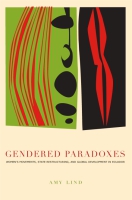




Gendered Paradoxes
Women's Movements, State Restructuring, and Global Development in Ecuador
Amy Lind
Gendered Paradoxes
Women's Movements, State Restructuring, and Global Development in Ecuador
Amy Lind
“A nuanced and critical reading of gender, development, and globalization issues. Lind’s panoramic analysis of Ecuadorian women’s negotiations with development projects, the state, neoliberal adjustment policies, and NGOs provides a theoretical framework and an ethnographic account of issues with a global resonance. Exploring the gendered political cultures of development in Ecuador, she analyses the contradictory processes by which gender, institutions, and political movements come together in the uneven process of neoliberal restructuring.”
- Description
- Reviews
- Bio
- Table of Contents
- Sample Chapters
- Subjects
Drawing on her extensive ethnographic fieldwork and employing an approach combining political economy and cultural politics, Amy Lind charts the growth of several strands of women’s activism and identifies how they have helped redefine, often in contradictory ways, the real and imagined boundaries of neoliberal development discourse and practice. In her analysis of this ambivalent and “unfinished” cultural project of modernity in the Andes, she examines state policies and their effects on women of various social sectors; women’s community development initiatives and responses to the debt crisis; and the roles played by feminist “issue networks” in reshaping national and international policy agendas in Ecuador and in developing a transnationally influenced, locally based feminist movement.
“A nuanced and critical reading of gender, development, and globalization issues. Lind’s panoramic analysis of Ecuadorian women’s negotiations with development projects, the state, neoliberal adjustment policies, and NGOs provides a theoretical framework and an ethnographic account of issues with a global resonance. Exploring the gendered political cultures of development in Ecuador, she analyses the contradictory processes by which gender, institutions, and political movements come together in the uneven process of neoliberal restructuring.”
“Amy Lind provides an excellent account of the paradoxes of gendered neoliberal politics in a country about which little on this topic has been published. Through a detailed analysis of women’s organizational and community survival strategies, the author ably demonstrates how women’s politics both reshape and are shaped by the dynamics of neoliberalism. Tackling the essential task of ‘making feminist sense of neoliberalism,’ Lind’s timely study provides invaluable insights into the contradictions of development and globalization.”
“Gendered Paradoxes takes us through the complex processes though which women in Ecuador have increased their participation in the country’s political, social, and economic battlegrounds since the 1980s. Drawing on extensive ethnographic fieldwork and based on a good understanding of gender analysis, Amy Lind describes how women have negotiated with the state and gained visibility within the context of neoliberal policies and gender politics. Analyzing the different strands of feminism that have shaped activism, she shows how they have contributed to rethinking democratic governance while mobilizing themselves to encounter the ‘contradictions of modernization and development.’ The book is an important contribution to the literature on gender and development in Latin America.”
Amy Lind is Mary Ellen Heintz Associate Professor of Women's Studies at the University of Cincinnati.
Contents
List of Tables and Figures
Preface and Acknowledgments
List of Acronyms
Introduction
1. Myths of Progress: Gender, Citizenship, and Modernization in Ecuador
2. Ecuadorian Neoliberalisms and Gender Politics in Context
3. Neoliberal Encounters: State Restructuring and the Institutionalization of Women’s Struggles for Survival
4. Women’s Community Organizing in Quito: The Paradoxes of Survival and Struggle
5. Remaking the Nation: Feminist Politics, Populist Nationalism, and the 1998 Constitutional Reforms
6. Making Dollars, Making Feminist Sense of Neoliberalism: Negotiations, Paradoxes, Futures
Appendix: Chronology of Events
Bibliography
Index
Introduction
Science and expert discourses such as development create powerful truths, ways of creating and intervening in the world, including ourselves. . . .
. . . [I]nstead of searching for grand alternative models or strategies [of development], what is needed is the investigation of alternative representations and practices in concrete local settings, particularly as they exist in contexts of hybridization, collective action, and political mobilization.
—Arturo Escobar, Encountering Development: The Making and Unmaking of the Third World
In this book I examine one local setting in which women have politically mobilized to “encounter development” in Latin America: that of Quito, Ecuador. As I show, the political identities and strategies of women's community-based and nongovernmental organizations in Quito are neither entirely radical nor traditional, nor necessarily original. Yet they reveal much about the gendered making of modernity, national identity and politics in Ecuador, a country whose state-led modernization project has been paradoxical and inherently unequal from the start.
In the early 1980s, thousands of poor and working-class Ecuadorian women, for the first time, attended community meetings in neighbors’ homes, municipal buildings, churches, or meeting halls, with the hope of addressing their economic and social circumstances. They met in poor neighborhoods in cities such as Quito, the political capital; in Guayaquil, Ecuador’s industrial center; and in rural Andean provinces, El Oriente (Ecuador’s Amazon region), and coastal towns. Particularly in urban areas such as Quito, where rapid rates of industrialization coupled with urban migration created higher levels of unemployment and social service needs for newly arrived migrants during the 1960s–1980s, women were faced with a new set of issues pertaining to their identities as urban dwellers, parents, workers, and national citizens. In many ways, the Ecuadorian state’s goals to modernize the nation during the post–World War II period, including its 1960s and 1970s industrialization policies, oil development, and maternalist social welfare strategies that “targeted” poor sectors of women as “mothers of the underdeveloped nation,” coupled with its growing reliance on foreign aid and the shift toward market-led development, set the stage for women’s mobilization in the early 1980s. Economically speaking, despite widespread claims by the international development community that Ecuador had “advanced” in numerous indicators (World Bank 1984; P. Beckerman 2002), many Ecuadorian families experienced ongoing, persistent poverty, which was only exacerbated by Ecuador’s growing debt crisis.
In 1981, the Ecuadorian government first began to implement structural adjustment measures so that it could receive loans from the International Monetary Fund (IMF). These measures, based on World Bank– and IMF-inspired neoliberal policies, which were designed to stimulate economic growth through foreign investment, trade liberalization, privatization, state retrenchment, and the redistribution of social welfare, had some expected social consequences, such as increased unemployment and high inflation rates. Yet they also had unintended consequences for organized sectors of poor women who, by that time, had begun to receive ideological or financial support from the emerging international women in development (WID) field and from global feminist movements. During this period, many groups of women at the grass roots developed ties with feminist nongovernmental organizations (NGOs), the Ecuadorian state (including, most notably, the state women’s agency), philanthropic foundations, political parties, and international development institutions such as United Nations (UN) agencies (for example, the United Nations Children’s Fund [UNICEF] and the United Nations Development Fund for Women [UNIFEM]). At the time, although many women recognized the extent to which their roles as community members, mothers, and citizens had been jeopardized by the emerging economic crisis, they did not foresee how their roles would, in a sense, become integrated into the logic of development. Most attendees at the meetings mentioned earlier, for example, did not realize that their involvement as community activists would become relatively permanent, or institutionalized, as a result of neoliberal development policies (including those concerning gender) that rely on women’s household and community labor as a foundation for economic restructuring. In essence, these women “mothered” the Ecuadorian foreign debt crisis through their individual and collective survival strategies—a process that served more broadly as a crucial signifier for national progress and for state and global financial accountability (or lack thereof). It was a process that even global feminism could not foresee.
Ecuadorian State Restructuring and Development in Context
The Ecuadorian economic and political crises of the 1980s and 1990s must be situated within the broader context of the historical construction of the state and nation, the institutionalization of the international development field, cultural and economic globalization, and struggles for citizen rights (that is, political, social, and economic rights (Menéndez-Carrión 1989; Escobar 1995; Radcliffe and Westwood 1996; Lechner and Boli 2001). As Norman Whitten has stated, “It is essential . . . to look at Ecuador in its multifaceted particularities and to set its historical and emergent cultural systems in global dimensions” (2003, 2). The state, a crucial institution in the making of the nation, has evolved through a transnational lens in the sense that over the years it has depended on the successes and failures of the economy for its growth, including through its performance in the global market (cacao, bananas, petroleum, flowers; see Schodt 1987; Striffler 2002). From the start, ideologies of progress and modernization shaped the state’s identity and goals and contributed to its identity as a modern social welfare state (a symbol far more so than a reality) in the mid-twentieth century (Clark 2001). The establishment of the post–World War II development field, which channeled bank loans and other forms of aid and assistance to the country as well as funneled ideologies of modernization to public and private sectors, has contributed to the transnational nature of the state. The state itself has relied on notions of modernization to achieve its goals of guiding the nation’s development and defining citizenship (Becker 1999; North 2004). At least prior to the 1990s, Ecuador was commonly viewed by international aid institutions as “nonthreatening” and as suitable for foreign investment, because of its comparatively small population (13 million in 2004) and “low levels of social protest, geographic diversity, and relatively high political and economic stability” (Corkill and Cubitt 1988). State incentives to attract foreign investment, coupled with the discovery of oil in the 1960s, contributed to marked increases in the presence of multinational capital (Schodt 1987; North 2004). International organizations chose to house their regional offices in Quito, sometimes because of the country’s romanticized image among Westerners as “safe,” relatively “democratic,” and open to Western ideas and values—at least prior to the 1990s (Corkill and Cubitt 1988).
Regardless or perhaps because of this exoticized Eurocentric image of Ecuador as a cultural paradise ripe for foreign investment, indigenous people, peasants, and various other political sectors have long challenged colonialism and its cultural, political, and economic legacies. By the year 2000, the Ecuadorian indigenous-rights movement was considered among the “strongest” in Latin America by many observers (Meisch 2000; Roper, Perreault, and Wilson 2003; Weismantel 2003; Sawyer 2004) and the women’s movement had made comparatively significant legal and political achievements, as had the Afro-Ecuadorian movement to a lesser degree. Ecuador’s move to “partyize” social movements led in part to the historically unprecedented political conjuncture in 1998, when the indigenous and women’s movements helped redraft the constitution and had by then gained official representation in the formal political system, thus helping to remake party politics, and reshape the state’s image, in numerous ways (Rosero, Vega, and Reyes Ávila 2000). These social movements, which gained ground in the 1980s and early 1990s, necessarily have challenged globalization and the Ecuadorian nation-state as it implements a neoliberal development project that relies on a universal notion of citizenship and uninational identity and, in so doing, have helped to inspire a rethinking of the nation-state itself. From community protests against foreign oil companies in the Amazon region to indigenous marches (Sawyer 2004), street blockades, and hunger strikes in the Andes to millions of people taking to the streets of Quito and Guayaquil in January 1997 and thereafter, Ecuadorians have not passively accepted the terms of development, globalization, and modernization, not even during periods of relatively little social movement activity, such as the 1950s and 1960s.
The so-called NGOization of social movements (Alvarez 1998b), which for women’s groups coincided with the United Nations Decade for the Advancement of Women (1975–85) and the establishment of the international women in development (WID) professional field, transformed the political landscape in Ecuador. In the 1980s and 1990s, a much greater number of development organizations, particularly NGOs, received external funding in Ecuador, also a reflection of the broader trend throughout Latin America to provide support for civic organizations during the region’s redemocratization period (Jaquette 1994; Jelin 1990; Alvarez 1990). Whereas prior to the 1980s there were only a handful of NGOs, by 1994 there were more than one thousand NGOs registered in the country, among them community associations and nonprofit organizations with a paid staff, all of which focused to some degree on social or economic development, including social welfare (Segarra 1994; United Nations Development Program [UNDP]/Alternativa 1992). Although they are scattered throughout the country, historically Quito has been home to the largest percentage of NGOs (UNDP/Alternativa 1992). Among the thousand NGOs in existence during the 1990s, approximately seventy of them focused on gender issues, including gender inequities in health care, literacy, income generation, land rights, and political rights (Rodríguez 1990).
The NGOization of Ecuadorian society was also spurred on by the country’s new economic development strategy, which aimed (among other things) to privatize the state’s social welfare functions, such as social service delivery, through establishing public-private partnerships (Sikkink 1991). The new partnerships were derived from “the purposeful attempt(s), either from NGOs or the state, to coordinate, partner, or create regular patterns of information sharing” among this newly formed “welfare network” in Ecuador (Segarra 1996, 492). Through this process, designated NGOs have been allocated new responsibilities for managing health care, welfare distribution, and other social services, areas of social and economic well-being typically gendered as “feminine.” Certainly it has been true that this process, whereby the economy, social welfare, and everyday life has been privatized to some degree, has had significant gendered effects for women, in part because they are assumed to fit into the new institutional arrangements by nature of their maternal responsibilities and their perceived (voluntary) roles in community life—a topic I develop in Chapter 4. Their integration into state-sponsored projects stemming from the National Development Plan, a document that is rewritten by each new government, and into NGO projects, particularly those that operate within the logic of “free market” development, has yielded new political opportunities for women, among these increased participation in community-based, municipal, and, to some extent, national politics; the establishment of regional political networks; and the emergence of feminist public policy in Ecuador.
These factors (NGOization, globalization, developmentalism) were coupled with Ecuador’s internal process of social movement formation, in which during the 1980s many grassroots movements acquired NGO status and became professionalized as a way to advance their political agendas, much as did women’s movements throughout Latin America (Alvarez 1998b). To foster this process of strengthening civil society through building the professional capacity of NGOs (that is, as part of Ecuador’s redemocratization initiatives), the Ecuadorian government’s laws granting NGO status were relatively lenient throughout the 1980s and early 1990s. At one point in early 1993, there were more than then thousand organizations on a waiting list at the Ministry of Social Welfare, all of them were applying for their legal status. The ministry was unable to process so many requests and eventually froze the application process (Magdalena León, interview, October 11, 1993).
The 1990s brought on a new era in Ecuador, one that shattered romanticized images of the country as subservient to foreign capital and acquiescent to global political domination. The foreign debt and neoliberalism provided the background to this, as did political and financial exigency and the escalating identity crisis of a nation-state attempting to govern individuals through a universalist lens (despite claims that the state is “plurinational” or “multicultural” [see Roper, Perrault, and Wilson 2003]) while simultaneously exacerbating important class, ethnic, racial, and gender differences among Ecuadorians. The first indigenous uprising (levantamiento indígena) took place in 1990; and several national strikes, protests, and uprisings of various social sectors took place in the years that followed. During the 1997–2004 period, five governments led the country and all of them implemented neoliberal policies. Their political approaches and forms of policy implementation varied, leading to entirely different neoliberalisms and distinct outcomes during each administration (Phillips 1998). Some (e.g., Burt and Mauceri [2004]) have compared the Ecuadorian neoliberal project to those of other Latin American countries and considered it incomplete and somewhat unsuccessful, to the extent that governments have not been able to implement as many reforms as they would have liked, thanks in part to the role of social movements in opposing this process. While this may be true when Ecuador is compared to countries such as Bolivia, where one of the harshest sets of structural adjustment policies [SAPs] were implemented during the mid-1980s, devastating the livelihoods of tens of thousands of people (McFarren 1992), neoliberalism has been successful in Ecuador to the extent that state–civil society institutional relationships have been permanently transformed; many economic and social sectors have been dramatically restructured, some losing out more than others; and the general national development path, reinforced by the state’s dependence on foreign aid, has made a marked turn toward economic liberalization (Lind 2000; North 2004).
A positive aspect of this otherwise difficult process was the increased participation of members of the women’s and indigenous movements, along with that of other marginalized groups, in challenging the country to redress the financial and political corruption that culminated in the late 1990s political crisis. Although the nation was largely unmade during this period, social movement participants helped remake and transform the country, through the new public-private partnerships between the state and civic organizations; new political-participation laws; and large, national protests against government and financial corruption in the banking sector. Social movements helped renew a sense of national identity in a more inclusive way, despite the many challenges they faced. New identity claims were made by these movements, often based on ethnicity or gender, that served as a basis for Ecuador’s 1998 constitution, viewed by some observers as “one of the most progressive” in the world (Jochnick 1999). Many of the legislative actions that have taken place since 1998 are based on identity claims, and these claims and their potential conflicts need to be understood in order for the reforms to truly work in the years to come (Van Cott 2002; Shachar 2001).
In 2000, Ecuador became the second Latin American country to adopt the U.S. dollar as its official currency—that is, to “dollarize.” Dollarization became an important signifier of a nation in crisis: financially, politically, and in terms of national identity. Supporters of dollarization viewed it as a necessary response to financial crisis, rather than as a symptom or cause of further conflict, although this would soon be disproved (Beckerman 2002). This governmental strategy followed a period of financial crisis that had led to bank closings, the freezing of assets, hyperinflation, and arrested social security payments. During this period, retired women and men lined up in front of banks, in the hope that they would be fortunate enough to receive at least a portion of their social security payments. Today, many of the children of the elderly must provide housing and financial support for their parents. Poor and middle-class women and men have been particularly hard hit; many of them have lost their entire savings. While the introduction of the U.S. dollar was meant to bring stability to Ecuador’s economy, in reality, for many people it has meant lost savings, inflationary costs of living, fewer jobs, and heightened economic insecurity. According to traditional economic indicators, Ecuador’s economy grew during the 2000–2002 period: in 2001 alone, it grew by 5.4 percent, the fastest rate in the region. During that same year, the national budget was balanced and inflation was 22 percent, down from 91 percent in 2000 (“Mixed Blessing” 2002). Yet it is far too soon to assume that this is a positive trend. To begin with, this growth spurt merely balanced out the economic losses from the late 1990s. And additional indicators paint a different picture of Ecuador’s reality at the turn of the century: in general, real wages have declined, and in urban areas “only four in ten workers have a proper job” (1). According to government estimates, 56 percent of all Ecuadorians lived in extreme poverty in 2001, meaning that they earned less than forty-two dollars a month, the country’s minimal standard for a sufficient income (1), an increase from 35 percent who lived below Ecuador’s poverty line in 1994 (World Bank 2003a). Since 1999, more than four hundred thousand Ecuadorians have migrated to Spain or the United States; their remittances, which totaled $1.4 billion in 2001 alone (“Mixed Blessing,” 1), are now the second-largest source of foreign exchange after oil. Political protests have remained a constant in daily life throughout the country. Indeed, it is clear that the dollarization legislation has signified far more than an economic change: it reflects the growing cultural and political tensions surrounding state modernization, neoliberal development, globalization, and the ongoing struggle for national identity in Ecuador.
In this regard, Ecuador serves as an excellent example of the contradictions of modernization and development: although many large-scale economic-growth models have been introduced in the country, the fact is that income inequalities between rich and poor are higher than they were when Ecuador first established an industrial economy in the 1950s; and since the inception of SAPs in 1980, there are approximately 15 percent more Ecuadorians living in extreme poverty than prior to the introduction of SAPs and related neoliberal development policies (World Bank 2003a, 2003b). Like their counterparts elsewhere, poor women (although many men, too) have carried the heaviest burdens during this period of economic crisis and restructuring, in part because of their socialized gender roles in “reproduction”—a sphere of activities (child care, household management and budgeting, shopping) that itself has been transformed by institutional shifts and heavily questioned as conceptually appropriate or adequate (e.g., Moser 1989a, 1993; Lind 1992; Escobar 1995), and because of their marginal positions in the paid capitalist economy, including in the informal sector (Benería and Feldman 1992; Bakker 1994; Moser 1995; James 1996). Racism and Eurocentrism also factor into this situation, by shaping political and economic opportunities and more fundamentally by shaping the epistemological and ontological frameworks within which development, citizenship, and people’s lives are defined, understood, experienced, felt, and lived. The nation is composed of a majority who define themselves as mestizo/a or indigenous; it contains many languages and cultures; and approximately 10 percent of its population is of African descent, with a very small population of Spanish or otherwise European origin (Whitten 2003a). Eurocentric discourses of race continue to frame social relations. Approximately 70 percent of the population live in poverty or subpoverty conditions and 7–10 percent live abroad, particularly in the United States or Spain (Weismantel 2003). Poor women who identify as mestiza, indígena, chola, or negra face intersecting forms of oppression that shape their everyday lives, political and economic opportunities, and visions for a future, in complex and profound yet also contradictory ways.
Women’s Encounters with State Modernization and Neoliberalism
Because of how gender underscores these broad historical, structural inequalities, throughout Latin America, urban poor, peasant, and indigenous women have been among the first to make connections between global change and daily life and to politicize their “roles in development” (Benería 1992b). Sectors of poor women have responded to economic crisis and restructuring in innovative ways, often politicizing and putting into question their class positions, their racialized roles and identities as women, and their social locations as “Third World” or “underdeveloped.” Although the network of Ecuadorian women’s organizations and movements is small, relatively speaking, when compared with larger countries such as Brazil, Mexico, or Peru, in recent years Ecuador has had one of the most successful feminist “issue networks” in the region, one that has led to the establishment of feminist public policies and laws (Htun 2003; Herrera 2000; Rosero, Vega, and Reyes Ávila 2000). More than twenty gender-based legislative actions were made in the 1995–2000 period alone (see Appendix), including the passage of new laws against violence against women, the installation of a female quota for political participation, and the repeal of several discriminatory laws. These would not have been possible without the strong elite network of feminist policy-makers and activists, along with doctors, legislators, and state officials, who all coalesced to push for these reforms (Htun 2003, 5). Women’s NGOs and networks have actively challenged the terms of neoliberal development policies in effective ways, through building national coalitions against specific government policies and through questioning the foundation of populist neoliberal governments, such as that of President Abdalá Bucaram (1996–97), that simultaneously promoted gender equality and multiculturalism on the one hand, and universal “trickle down” economic development on the other (see Chapter 5).
Feminist-issue networks have employed specific notions of gender, motherhood, sexuality, and national identity to achieve their goals—what I refer to as strategic essentialism, a term originally theorized by Judith Butler (1990). For example, members of some groups have used their traditional roles as mothers to fight for social justice or against economic imperialism; their performance of motherhood in the streets, in public protests, or at meetings may invoke a more traditional notion of motherhood than they actually live out in their own lives. Essentialism, a term often rejected by postmodern scholars, is what shapes their political identities and struggles. Understanding their “processes of self-essentializing” is crucial to understanding their struggles and the broader national context. “[E]ssentializing is at the heart of empowerment, pride, and alternative modernity,” as Rachel Corr observes (quoted in Whitten 2003a, 13). Structural conditions such as the economic crisis and political instability were catalyzing factors for Ecuadorian women activists in their opposition to the neoliberal restructuring process, yet they were also motivated by their desire to transform broader arenas of power and to rethink fundamental concepts of democracy, citizenship, and rights. Ironically perhaps, strategic essentialism played an important role in their immediate challenges to the state and, in the long run, to the transformation of gender relations.
The challenge, though, was and continues to be how to construct political and economic strategies without selling out to the powers that be: patriarchy; the state (be it social democratic or neoliberal); or the international development arena, including the WID field. Women activists have often disagreed about whether or not they should participate in the new public-private partnerships or accept funding from international development agencies. Increasingly during the 1980s and 1990s, women began to protest the presence of foreign aid agencies and institutions in their movements, adding to their long-standing criticism and analysis of male-based forms of political power. Their notion of political autonomy was internationalized, and they began to see certain strands of feminism as part of the problem. In Quito in 1998, at an International Women’s Day march, an event that takes place annually on March 8, Feminists for Autonomy (Feministas por la Autonomía) gathered at the Plaza de Independencia in Quito’s historical center to pronounce their independence from the state and international development apparatus. Following years of feminist participation in policy making and the international development field, these feminists sought autonomy not only from male-based political processes but also from what they viewed as the “gender technocracy,” those feminist institutions and individuals they viewed as selling out to the industrialized countries by adopting Eurocentric notions of women’s liberation and modernization and by receiving funding and implementing projects that were framed through a Western lens (Mohanty 1991). Feminists for Autonomy argued that this gender technocracy, including women’s NGOs, UN agencies, and foreign governmental development agencies, was part of the larger international development technocracy. They referred to this web of institutions as a technocracy to highlight the tendency in the development field to define the realities and needs of poor countries in scientific, seemingly objective terms that, they argue, depoliticize and decontextualize the neocolonial reality of poor countries such as Ecuador (Escobar 1995).
As a way to address this set of issues, the 1998 march participants focused their attention on the political crisis following the February 1997 ousting of President Abdalá Bucaram (August 1996–February 1997) and inequalities stemming from global neoliberal restructuring in Ecuador. The autonomous feminists came on horseback, dressed as Manuela Sáenz, the lover of Simón Bolívar, liberation leader of the movement for independence against the Spanish colonial government in the eighteenth century. Recently popularized in literature, Sáenz is known for saving Bolívar’s life on more than one occasion. As they performed Sáenz’s historical image at the downtown plaza, the feminists called for a “remaking” of the Ecuadorian nation (Radcliffe and Westwood 1996). This national remaking has included reforming the political system, redrafting the constitution, and challenging financial and political corruption. They invoked Sáenz, a largely unrecognized female national hero, in a challenge to the current unmaking of the nation through the government’s corruption and gendered political antics and in a challenge to the global economic forces that have shaped and limited Ecuador’s development agenda and sense of identity.
In this book I argue that women’s political and economic struggles for survival in the neoliberal context are best understood in terms of how women they, in complex ways, state modernization and global development. I examine how women interpret and intervene in public and private arenas, often paradoxically, and what the significance and gains have been alongside the limits of these types of gender identity politics and strategies. I foreground my primary discussion about women’s movements, economic restructuring, and state modernization during the 1980–2004 period with a chapter on the historical relationship of women and the state in Ecuador. How women negotiate state modernization, including economic and social development policies, depends on their relationships to other social actors (NGO activists, development practitioners, politicians, and others who have a stake in poor women’s survival strategies) and to the interventions of these other actors in the realm of development projects and frameworks that target the urban and rural poor. This broader context, after all, helps frame women’s political identifications and visions from the start, along with the strategies they develop and the relationships they construct with the state and other sectors of society.
I am interested primarily in how poor Ecuadorian women’s political and economic strategies, in theory and practice, have been framed (by participants themselves as well as by researchers of women’s movements) within a national and global social, economic, political and discursive context. As Ecuadorian women activists frame their struggles “in and against” global neoliberal restructuring and the nation-state (Lind 2000), they are invoking a set of assumptions about gender, family, politics, the economy, and development. Community women activists draw from their traditional gender roles, including their roles as mothers, yet they do so to challenge broader structural inequalities and institutions, including the Ecuadorian state and foreign lenders (such as Citibank, the World Bank, and the IMF). At the same time, women’s community-based and nationwide organizing has helped refashion national development and politics; in this regard, women activists have contributed in important ways to reenvisioning neoliberal development, remaking the nation, and imagining a postdevelopment era (Escobar 1995; Saunders 2001).
As Feminists for Autonomy point out, there is a downside to becoming institutionalized and bureaucratized under the logic of neoliberal development, an ideology and set of policies that emphasize free markets, global economic integration, and less state involvement in social welfare distribution. Neoliberal policies, especially those stemming from World Bank– and IMF-inspired structural adjustment measures, contribute to the ideological and economic institutionalization of women’s community organizing in important and unintended ways, including through the targeting of poor women as volunteer contributors to the development process. Some women benefit from neoliberal development policies, while others lose out; class inequalities and women’s locations in this process greatly shape the outcome of specific policies. Some women align themselves with development and progress, while others experience an “identity crisis,” as is suggested in the title of Bolivian scholar Fernando Calderón’s (1988a) essay, “Cómo vivir en la modernidad sin dejar de ser indio” (How to live in modernity without giving up one’s Indian identity). Women activists have experienced this identity crisis on various levels: some feminists view the past two decades as transformative, since it has been a period of increased political visibility for women’s rights; others see it as a time of economic deterioration and an erosion of women’s social and political rights (Barrig 1998; Schild 1998). Some view the increased presence of WID institutions and research programs, feminist NGOs, national educational campaigns, and feminist policy-making and advocacy as a product of successful feminist organizing; others protest these very institutions, projects, and research programs on the basis that they are colonizing the realities of Latin American women, and as Westernized gender technocracies that do nothing other than reproduce and institutionalize Western forms of knowledge about women and development. A feminist achievement for some is for others a violent imposition, a negative form of gendered globalization, or a colonization of local values and forms of knowledge about women. While one can hardly divide feminists into two camps, “institutionalized” and “autonomous” (Alvarez 2000), these accusations raise much broader issues about the complexities of change associated with neoliberal development and globalization.
Hierarchies in thought and practice regarding state and international development policies (Kabeer 1994), including the power relations implicit in designating groups of people as “in need” of humanitarian assistance or loans, reflect and often reinforce the gendered, classed, and racialized social order of Ecuadorian society. During the early twentieth century, the Ecuadorian state began to see the population itself as a form of human capital, a move that had specific effects for poor women and men (Clark 2001). In conjunction with this, it began to define its role in providing social welfare as an obligation and as a citizen right. During Ecuador’s first major economic crisis (1920s) and the most recent crisis (late 1990s), economic instability has produced levels of national anxiety that have crucially shaped the context in which public debates about social welfare and later, women’s issues, became possible (Clark 2000; North 2004). As Mary Weismantel has stated in her research on sex and race in the Ecuadorian Andes, “Weak economies generate an even more profound threat to the nation” (2003, 330); and public debates about family and morality are often at the heart of nationalist crises (Sunder Rajan 2003).
In general, socioeconomic development frameworks that prioritize growth and posit a universal subject tend to benefit men over women, mestizos over indigenous people, industrialized countries over poor ones, and Western over non-Western cultures. Many development frameworks assume that poor women will absorb the costs of restructuring through their unpaid household and community labor: as state social expenditures decrease, poor women are most affected, as their economic burdens tend to increase as a result of the privatization of social welfare systems (Lind 2002). Neoliberal development frameworks have exacerbated development hierarchies and inequalities by accelerating models of economic growth and liberalization and by privatizing social welfare distribution.
Paradoxically, several historically marginalized groups in Ecuador have gained some political ground during the neoliberal period, despite the fact that their economic livelihoods have eroded. The institutionalization of the international development field since the 1950s, including through funding for national governments and the efforts of the NGO sector to redistribute social welfare, has facilitated the process of social mobilization among women and indigenous sectors, for example. This is so, despite the fact that the ideas and actions of the women’s and indigenous movements have at times been appropriated, ignored, or made invisible by the state and international development institutions. Ecuador’s social movements have challenged state modernization and global neoliberal restructuring as exclusionary processes that place women, the poor, indigenous people, and the Ecuadorian nation-state in a contradictory position vis-à-vis the new forms of global governance.
In some ways, antineoliberal social movements in Ecuador and elsewhere are not new: many of the issue networks and coalitions that were formed during the 1990s have their foundations in earlier social movements—“old” peasant and leftist struggles and in “new” identity-based groups such as those at the heart of the women’s, the indigenous, and the black movements (Slater 1985; Escobar and Alvarez 1992; Alvarez, Dagnino and Escobar 1998a). Neoliberalism is not new, either, although it heightens cultural, political, and economic tensions, because its philosophical foundations and the concrete policies that emerge from neoliberal governments promote individualism, market competition, the integration of noncapitalist labor into the capitalist economy (including women’s reproductive labor and indigenous “cultural labor” (see Radcliffe, Laurie, and Andolina 2004), and globalization.
<1> Cultural Politics and Gender
I view women’s negotiations with neoliberal development as cultural-political struggles, in two important senses. First, organized women are questioning the world “out there,” how we think about development, and the subjectivities of those who produce and consume images of development, including those who practice it. In this regard, they are not only challenging politics and economic policies but also the cultural contexts within which these are defined, created, and translated into action. To understand this aspect of women’s organizing, I examine how specific constructions of gender, family, and motherhood are produced and used strategically in women’s community organizing as well as in the process of neoliberal restructuring, including in national politics, state policy making, and international institutions such as the World Bank. Second, women are struggling for access to political power and material resources as well as interpretive power, the power to interpret the reality within which they live (Franco 1989). In this regard, the power to name, to see, to identify, to make visible, is as important to their struggles as is the power to redistribute, organize a march, lead a community project, or write a policy statement. An analysis of gender politics is necessarily about culture as well, as notions of “the political” are embedded in cultural understandings of identity, power, and social change. Likewise, my analysis of cultural practice also is necessarily about politics, since knowledge production, identity production, and cultural/social institutions are embedded in and stem from political negotiations and structures of power (Alvarez, Dagnino, and Escobar 1998a).
An important aspect of my research on women’s survival strategies involves rethinking “the economy” from this cultural-political perspective. While many feminist political economists and cultural studies scholars have criticized development discourse for essentializing the experiences of women in “Third World” or Latin American societies (Ong 1987; Mohanty 1991; Saunders 2002), few have analyzed the ways in which women negotiate and define their economic identities and roles from this cultural-political perspective. And while many feminist scholars have turned to studies of politics and culture as a way to avoid economic essentialism, they have done so at the expense of understanding how the economy itself, and related notions of neoliberalism and globalization, are socially constructed, embedded in global power relations, and subject to negotiation by organized women. Likewise, I view policies and the arena of policy-making through the same cultural-political lens. Policies themselves are important sites of struggle and resistance (Shore and Wright 1997a, 1997b), not only in terms of how people respond to economic policy change but also in terms of how policies themselves reflect inequalities and forms of prejudice inherent in Western knowledge production. A social policy that assumes women will volunteer to distribute food or manage a day-care center, for example, posits poor women as absorbers of the crisis and transfers, in invisible and visible ways, a heavy responsibility to them to manage welfare in their communities. To the extent that this representation of women as mothers and absorbers of the crisis is translated into the institutionalization of poverty and survival in poor communities, this policy is both symbolically and materially violent for these sectors of poor women, in addition to the ways in which it constructs racial, class, and Third World difference. How people benefit or suffer from neoliberal policies depends on their material locations as well as how their lives and identities are represented in frameworks: interpretation and implementation are two sides of the same coin that reinforce societal relations of power.
<1> Place, Transnationality, and Gender Identity Politics
As in other Latin American countries, in Ecuador social movements have developed through transnational, rather than merely local or national, networks. Globalization, a highly contested process that is at once economic, political, and cultural (Lechner and Boli 2001; Bergeron 2001), arguably has brought with it negative economic effects but also computers, e-mail, and cell phones to many activists. Through e-mail networks, an International Women’s Day (March 8) march in Quito can be coordinated with marches in Brazil, Costa Rica, Mexico, and India. An idea is not formed merely from the local context but from communication across national borders, around the world. This is so despite the fact that the geopolitics of development are such that we are taught to understand not the similarities but rather the differences among nations and women’s struggles within and among First World and Third World countries (Mohanty 1991; Basu 1995). As many scholars have shown, although geopolitical boundaries are very real in the sense that they shape our daily lives in powerful ways, they are also constructs or imagined communities (Anderson 1983) that discourage us from making connections, understanding the limits of nationalist ideologies (Sunder Rajan 2003), and reimagining development (Bhavnani, Foran, and Kurian 2003). Some scholars in North America have suggested that we “turn the Western lens” back on ourselves, in the West, to rethink the very concepts we use in our research on non-Western societies (e.g., Herzfeld 1992; Mohanty 1991). Indeed, this has been an important project in Western social theory and research, particularly in anthropology. However, it clearly remains important to think about, study, and rethink cultures, genders, economies, and politics around the world, in contexts different from our own. As anthropologist Orin Starn states, “The turn to ‘bring it back home’ is a welcome broadening of focus. Nevertheless, the persistence of Western ignorance and miscomprehension means that a role still exists for an anthropology of places like Burundi, New Guinea, Indonesia . . . Peru [or Ecuador]” (1999, 16).
In this research I examine a field of sites (Alvarez, Dagnino, and Escobar 1998a; Gowan and Ó Riain 2000) that shape and give meaning to women’s political and economic agency in the context of state modernization, global development, and neoliberal politics in Ecuador. I situate women’s community organizations and Ecuadorian feminisms within a complex web of meaning and mobilization (Alexander and Mohanty 1997), a web that is influenced by local, national, and global discourses (Freeman 2001) and networks (Keck and Sikkink 1998). Gender is both implicit and explicit in this process: on the one hand, assumptions about gender are embedded in national politics and neoliberal policies; on the other hand, organized women have challenged gender biases in Ecuadorian nationalisms and processes of globalization. I understand that what I am observing is not one process but many; not one set of easily identifiable institutions but several sites or publics (Fraser 1997); not one discourse of globalization and neoliberal development but many that travel across borders, among and within wealthy and poor regions (Grewal and Kaplan 1994; Thayer 2000). My aim in this book is to map these seemingly disparate sites and publics in order to more adequately understand the successes and limits of women’s community organizing and feminism in the context of global change. The survival and political strategies I examine, while fragmented and sometimes contradictory, deserve our attention: they help us better understand how women have survived economic hardship as well as engendered and transformed public debates and global spheres of action.
It is important to clarify that I recognize that globalization and neoliberalism (or “neoliberal globalization,” as some authors have chosen to frame it [e.g., Rosero, Vega, and Reyes Ávila 2000]), are not all-encompassing and irreversible processes (Gibson-Graham 1996). To the contrary, they are historically constructed processes that have arisen through the systematization of a specific set of policies and beliefs concerning the “market,” a point I elaborate on in Chapter 2. Yet we are faced with working within and advocating social change in this context. Because of this, I am less concerned about the questions of where women position themselves vis-à-vis the state or development field (“inside,” “outside,” and so on) than I am about how women negotiate the public/private, local/national/global boundaries of international development and globalization. In some of the cases I examine in this book, women’s political struggles have brought on new public debates about much broader, seemingly gender-neutral processes and concepts such as redemocratization, citizenship, and participation. I also recognize the importance of distinguishing between different types of community women’s groups and NGOs. Some women’s NGOs, for example, tend to reproduce institutional and conceptual hierarchies more than others (Kabeer 1994), particularly those that have chosen to work uncritically within the framework of neoliberal development, have gained power in the new public-private partnerships, or have organized at a cost to their own survival. It is precisely these different strategies that I highlight in my study.
I situate my analysis of women’s organizations in the context of the transnational circulation of finance, labor, legislation, and the production of development knowledge, demonstrating how this circulation and the associated reordering of societal institutions and hierarchies help to constitute and reconstitute specific sectors of women as constituents and targets of development (Escobar 1995; Grewal and Caplan 1994). Although since its inception the international development field’s primary goal has been to alleviate Third World poverty, many women and men are worse off than they were prior to the debt crisis and SAPs. In part stemming from SAPs, many community groups must now frame their projects and goals in terms of the market in order to acquire development funding, thus limiting their political and economic possibilities. Yet how poor women are targeted by development practitioners also has positive consequences for the women involved, such as political and subjective empowerment, as many scholars have pointed out (e.g., Moser 1989a, 1993; Rodríguez 1994). If it did not, women would be less likely to work within the institutional boundaries of these neoliberal development hierarchies. I therefore emphasize the political and economic paradoxes of women’s struggles for survival, as a way to illustrate how women and men, in Ecuador and throughout Latin America, interpret and negotiate ideas about development, state modernization, globalization, and modernity in complex ways.
One irony of the past fifteen to twenty years, since the inception of neoliberal development policies in Ecuador and throughout Latin America, is that women’s movements have gained, rather than lost, institutional power. At the same time that democracy as a notion and set of practices is being challenged, and at the same time that the state is being privatized and according to some, “shrunk,” women’s movements have acquired important institutional spaces in the state as well as in the private realm of NGOs. Yet the question is, Which women benefit from this acquisition of institutional space—and which lose out? That is, Which women are targeted as the new constituents of development? Which women have the power to define the realm within which neoliberal development policies are designed and implemented? To what extent, if at all, does this configuration of state- and NGO-based feminist power coincide with or facilitate the broader project of neoliberal restructuring and globalization? How does neoliberalism contribute to reconfiguring gender relations and identities, and how does this, in turn, create new self-representations of the Ecuadorian nation-state? How do the new forms of gender politics themselves contribute to a restructuring of power relations among sectors of women and to refashioning national identity, development, and survival? These are some of the questions I wish to address in this book.
In Chapter 1, I address the historical trajectory of women’s movements in Ecuador and their relationship to the state, beginning with early suffragist and socialist feminisms (1900–1930s), women’s participation in the new labor, peasant, and indigenous struggles of the 1930s and 1940s, and their activism during the 1970s military dictatorship and the following redemocratization process. I examine the parallel process by which the Ecuadorian state made social welfare central to its modernization project, including how specific governments and ideological movements shaped the social policy field that began to develop during the mid-twentieth century. In this chapter I show how my analysis of feminism, urban poor movements, and neoliberal state restructuring will be situated in the remaining chapters.
In Chapter 2, I address the cultural politics of neoliberalism in Ecuador on two levels. First, I provide a discussion of the nature of neoliberal reforms in the country, covering the origins of the 1980s foreign debt crisis and SAPs, which importantly shaped the possibilities of state political reforms in the years to come. I pay special attention to the gender dimensions of these reforms as they have affected the urban poor and the realm of “women’s work” (Benería and Feldman 1992). Second, I discuss conceptual debates about neoliberalism and globalization, including the gendered nature of their discursive constructions in public debates and in political and economic discourse. I illustrate how policies themselves are important sites of struggle, and how and why the making of feminist public policies in Ecuador has been central to women’s organizing (Shore and Wright 1997b; Rosero, Vega, and Reyes Ávila 2000).
Chapter 3 is an in-depth study of the Ecuadorian state’s role in restructuring the provision of social welfare during the 1988–96 period, including through a state child welfare project that provided funding for day-care centers in poor urban communities. The child welfare project helped to strengthen local women’s organizations, since they were called upon to manage the day-care centers, yet it also helped to institutionalized the women’s survival struggles by requiring their participation yet paying them little and increasing their overall economic burdens. Once thought to be “temporary” participants, poor women who volunteer in community development initiatives have now become permanent players in social welfare redistribution.
In Chapter 4, I analyze the experiences of community women’s organizations in southern Quito. I focus on the paradoxes of their forms of survival and struggle: the political paradoxes of utilizing specific notions of femininity (for example, their traditional gender roles as mothers) to take a stance against neoliberal state restructuring and achieve some level of political power, and the economic paradoxes that derive from the fact that they continue to be exploited laborers and second-class citizens. They, too, reinforce these paradoxes through the construction of their political identities and strategies; sometimes their use of their traditional gender roles in community development initiatives reinforce, rather than challenge, their economic exploitation and poverty.
In Chapter 5, I examine feminist politics and the gendered contradictions of neoliberal state formation in the context of the 1997 political crisis. In particular, I examine how four feminist strands responded to President Bucaram’s (August 1996–February 1997) populist antics and approach to neoliberal restructuring. Through their process of organizing against the Bucaram administration, a process that the entire nation participated in, the four feminist strands helped to remake the nation, both institutionally, through their participation in the constitutional reforms, and symbolically, through their challenges to political corruption.
In Chapter 6, I discuss the crisis of the state in Ecuador during the 2000–2004 period and its implications for feminist organizing and policies. I first discuss Ecuador’s dollarization process, which began in September 2001, and illustrate the restructuring of the social welfare system. Here, too, state development strategies have been limited by the lack of sovereignty of women and indigenous people within the global financial community but the 1998 constitution has opened many new spaces for political participation of the women’s and indigenous movements. The new so-called multicultural state faces the challenge of delivering social and economic rights to these sectors in a time of economic uncertainty and heightened national anxieties. I draw out the implications of this situation for Ecuadorian politics, Latin American feminisms, and studies of neoliberalism, development, and state restructuring.
Throughout the book, I suggest that women’s responses to global neoliberal restructuring and their relationships with the state are best understood as paradoxical; they participate in strategic negotiations with the state to achieve specific forms of material and interpretive power (the power to name and define policy agendas as much as the power acquired through access to the economic and social benefits of modernization and citizenship [Franco 1989]). I do not argue that women’s organizations have been merely victims, be it of the state, the World Bank, their husbands, or political parties; nor do I argue that they have been entirely oppositional, as indeed they have not (Lind 2000). The historical trajectory of Ecuadorian women’s organizing demonstrates that the struggle for gender-based rights (including an expanded notion of “rights” itself) has not occurred in this dualistic sense of working either in or against development and the state. This study does not portray a pure “antidevelopment” struggle nor only a reform movement; radical and reformist strands of feminism exist, however, and organizations have worked to challenge historical inequalities reinforced by the presence of international aid. Rather, this study illustrates how women’s organizations in Quito work at multiple, sometimes contradictory levels and in various social spaces to achieve specific goals. Their perceived success depends on the institutional and political climate as well as the personal relationships between organizations and individuals. The paradox of urban poor women’s struggles pertains to the fact that the longer the women have struggled, the worse their economic conditions have become, despite their best intentions. A broader feminist paradox is the ongoing struggle for citizen rights in a national context in which the majority lack social rights and continue to be marginalized, despite the recent political reforms.
Also of Interest
Mailing List
Subscribe to our mailing list and be notified about new titles, journals and catalogs.