


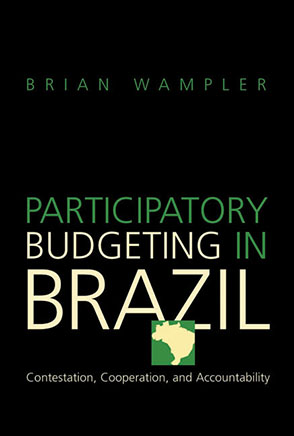
Participatory Budgeting in Brazil
Contestation, Cooperation, and Accountability
Brian Wampler
$34.95 | Paperback Edition
ISBN: 978-0-271-03253-5
328 pages
6" × 9"
1 map2007
Participatory Budgeting in Brazil
Contestation, Cooperation, and Accountability
Brian Wampler
“With its comparative analysis of eight cases of participatory budgeting (PB) in Brazil, varying from success to failure, Wampler’s book is a significant contribution to a literature heretofore dominated by single-case or two-case analyses (usually of only successful cases). His argument that divergent outcomes can be explained by analyzing political strategies of PB implementors and organized civil society participants within the real-world constraints of divergent local politics is helpful in avoiding ‘one design fits all’ conclusions.”—William Nylen, Stetson University
- Description
- Reviews
- Bio
- Table of Contents
- Sample Chapters
- Subjects
As Brazil and other countries in Latin America turned away from their authoritarian past and began the transition to democracy in the 1980s and 1990s, interest in developing new institutions to bring the benefits of democracy to the citizens in the lower socioeconomic strata intensified, and a number of experiments were undertaken. Perhaps the one receiving the most attention has been Participatory Budgeting (PB), first launched in the southern Brazilian city of Porto Alegre in 1989 by a coalition of civil society activists and Workers’ Party officials. PB quickly spread to more than 250 other municipalities in the country, and it has since been adopted in more than twenty countries worldwide. Most of the scholarly literature has focused on the successful case of Porto Alegre and has neglected to analyze how it fared elsewhere.In this first rigorous comparative study of the phenomenon, Brian Wampler draws evidence from eight municipalities in Brazil to show the varying degrees of success and failure PB has experienced. He identifies why some PB programs have done better than others in achieving the twin goals of ensuring governmental accountability and empowering citizenship rights for the poor residents of these cities in the quest for greater social justice and a well-functioning democracy. Conducting extensive interviews, applying a survey to 650 PB delegates, doing detailed analysis of budgets, and engaging in participant observation, Wampler finds that the three most important factors explaining the variation are the incentives for mayoral administrations to delegate authority, the way civil society organizations and citizens respond to the new institutions, and the particular rule structure that is used to delegate authority to citizens.
“With its comparative analysis of eight cases of participatory budgeting (PB) in Brazil, varying from success to failure, Wampler’s book is a significant contribution to a literature heretofore dominated by single-case or two-case analyses (usually of only successful cases). His argument that divergent outcomes can be explained by analyzing political strategies of PB implementors and organized civil society participants within the real-world constraints of divergent local politics is helpful in avoiding ‘one design fits all’ conclusions.”—William Nylen, Stetson University
“Wampler provides a compelling and original analysis of the democratic experiment known as participatory budgeting (PB). Drawing on field research undertaken in eight Brazilian municipalities, Wampler has developed a new framework for explaining why PB sometimes fails, sometimes succeeds, and sometimes yields mixed results. The author shows why enthusiasts should be cautious in their efforts to transfer PB to other contexts. This book will appeal to a broad audience of scholars and practitioners.”—Eliza Willis, Grinnell College“An essential text for the curious and discerning reader of one of the most important current innovations in Latin American democracy. . . . The text offers rich contributions to our conceptual understanding of state-society relations, exploring the nature of contestation and cooperation within PB, and the carefully constructed comparisons of observations in eight different municipalities within Brazil offer systematic explanations for PB outcomes. The lessons Wampler draws from his comparisons will be useful to those interested in the public policy of participation, an element that both developed and developing democracies have struggled with over the years. The text also offers valuable new details on well-known cases, such as Porto Alegre, the original home of PB, as well as explanations and observations of less well-known cases that turned out poorly, such as Blumenau.”—Aaron Schneider, Journal of Latin American Studies“Brian Wampler’s incisive comparative intranational study of the implementation of participatory budgeting (PB) sheds new critical light on this much-celebrated institution, now supported by the World Bank and UN Habitat and adopted in 40 countries and more than 250 Brazilian municipalities. His richly detailed account of the complex workings of the PB process shows conclusively that while it can help deepen democratization, its concrete political results have been mixed. Wampler’s nuanced findings and analytical insights about the promise and problems of PB make this a must-read for researchers, students, policy makers, rights advocates, and development practitioners alike.”—Sonia E. Alvarez, University of Massachusetts, Amherst“Wampler untangles the political and social factors that explain the connection between executive commitment and the success of participatory budgeting. . . . [He] makes a major contribution by illuminating the composition of civil society organizations that advance participatory democratic institutions.”—Archon Fung, Perspectives on PoliticsBrian Wampler is Associate Professor of Political Science at Boise State University.
Contents
List of Tables and Figures
List of Acronyms
Acknowledgments
1. Extending Citizenship and Accountability Through Participatory Budgeting
2. Participatory Budgeting: Rules of the Game
3. Authority, Negotiation, and Solidarity: PB Delegates’ Attitudes and Behaviors
4. Porto Alegre and Ipatinga: The Successful Delegation of Authority and the Use of Contentious Politics (Among Friends)
5. Blumenau and Rio Claro: Weak Mayoral Support and the Absence of Contentious Politics
6. São Paulo and Santo André: Co-optation, Limited Delegation, and Signaling
7. Belo Horizonte and Recife: Contentious Politics and Mayoral Shifts
8. Deepening Democracy Through the Expansion of Citizenship Rights and Accountability
Appendix
Bibliography
Index
1
Extending Citizenship and Accountability Through Participatory Budgeting
Participatory Budgeting [PB] is the best thing that has happened to the poor of Belo Horizonte because we can transform our neighborhood from favela into city. We can become part of the city.
—PB delegate in Belo Horizonte
PB absolves the government of responsibility. Instead of having government officials decide policy outcomes, PB pits poor against poor to fight over small projects. Instead of working together, we are in competition against other poor neighborhoods.
—PB delegate in Belo Horizonte
Participatory institutions provide citizens with the opportunity to work directly with government officials and their fellow citizens in formal, state-sanctioned public venues, allowing them to exercise voice and vote in decision-making processes to produce public policy solutions that may resolve intense social problems. Close working relationships among citizens and government officials are frequently forged, allowing for collaborative learning and in-depth negotiations. Citizens use newly won political rights to secure new social rights, thereby improving their communities and lives. Participatory institutions adopted in developing-world countries over the past two decades have often been designed to incorporate low-income and politically marginalized individuals who live in poor and underserviced neighborhoods. And yet, as we will see, the direct incorporation of citizens and community may also allow government officials to dominate the new institution as well as the agendas of civil society organizations (csos), which subverts the original intent of many participatory institutions—the expansion of rights, authority, and democratic practices to ordinary citizens.
The widespread adoption of participatory institutions accompanied the establishment of democratic regimes in Latin America during the 1980s and 1990s. In Latin America, many local (subnational) governments have adopted participatory institutions in hopes that the direct incorporation of citizens into state-sanctioned policy-making venues will promote social justice, increase transparency, and engage citizens by giving them voice and vote over substantive policy issues.
Accountability and citizenship rights are central to political, academic, and policy debates that seek to show how participatory institutions have affected citizens, governments, and state-society relations. The extension of accountability depends on the ability of citizens to be actively involved in monitoring the actions of government officials and requires that government officials be willing to subject their actions to examination by the governed. The establishment of citizenship rights, too, depends on the ability of citizens to actively use the rights legally afforded to them, as well as the willingness of government officials to ensure that these rights are protected in daily life. Participatory institutions are especially well suited to be analyzed using the concepts of accountability and citizenship rights because these institutions require the active participation of citizens and government officials.
Although there has been a proliferation of participatory institutions in the developing world over the past twenty years, we continue to lack a systematic and comparative accounting of how citizens use these institutions. We also do not understand the full range of political and policy outcomes that have been produced. In this book I analyze Brazil’s, and Latin America’s, best-known and most widely disseminated participatory institution, Participatory Budgeting (PB), in eight Brazilian municipalities. My goal is to develop a generalizable theoretical explanation to more fully account for how and if citizens and government officials use this innovative institution to extend accountability and establish citizenship rights.
PB has the potential to alter the political calculus in municipalities by giving individual citizens the right to express their preferences and interests (voice) in public venues along with the right to vote on specific policies. PB, as a policy-making institution, delegates specific decision-making authority to citizens, which has the potential to increase tensions among elected municipal legislators (vereadores), appointed officials, bureaucrats, PB participants, and other interest groups. Because PB operates at the center of key political and policy debates, it has the potential to transform how the state functions and how citizens interact with the state. This type of transformation can help to deepen democracy, promote pluralism, and lay the foundations for social justice.
And yet PB programs can also produce weak outcomes that will not transform basic decision-making processes or allow citizens to be directly involved in policy making. It is possible that poorly performing PB programs will have a negative impact on citizens and csos, which should temper calls for the widespread adoption of participatory institutions as a magic bullet that will transform the lives of poor citizens in poor and industrializing nations. In addition, citizens who participate in some PB programs may have little authority delegated to them, thereby limiting their ability to hold government officials accountable and to use PB as a means to activate and exercise their own rights.
The scope of authority exercised by citizens in PB is central to this book for theoretical, policy, and empirical reasons. On the broadest theoretical level, participatory institutions such as PB do have the capability of transforming basic democratic practices. PB has the potential to change basic state-society relations if governments in fact become more responsive to citizens as a result of PB. Citizens may also become more actively involved in political and civil society life, which may directly affect their local communities. PB is a new institutional format in which participatory decision-making processes are grafted onto existing representative democratic institutions. PB does not replace representative democracy, but it allows citizens to be directly involved in crafting public policies. In Brazil’s political context, PB has the potential to reshape how government officials produce decisions that directly affect the lives of their constituents. PB also has the potential to reshape how citizens experience democratic politics because citizens can participate in state-sanctioned public debates that result in government officials following the decisions made by these citizens.
How and by whom authority is exercised is central to empirical debates on democratization, which is why it is vital that we establish by whom, when, and where decisions are being made (namely, the legislative branch, executive office, and participatory venues). We must verify the scope of decisions that citizens are able to make. From a research perspective, we need to establish—or disavow—that citizens can and do make significant types of decisions within PB. Because PB is being adopted across Latin America and throughout the developing world, it is vital that we understand how citizens affect and are affected by this participatory institution.
Main Argument
The main argument in this book is that the substantial variation in the actual delegation of authority to citizens, which accounts for variations in how accountability and citizenship rights are extended, can best be explained by more closely examining (a) mayoral administrations’ incentives to choose to delegate authority, (b) the particular rule structure that is used to delegate authority to citizens, and (c) how csos and citizens respond to the new institutions. Under the most favorable conditions, mayors delegate substantial authority to citizens through PB, which means that citizens are able to exercise a new set of political rights and begin the process of holding governments accountable. This helps to deepen Brazil’s democracy because citizens are more active and governments are increasingly transparent and open. However, in several of the PB programs analyzed in this book, there is little to no decision-making authority delegated to citizens, thereby emasculating PB as a decision-making venue. When PB programs are especially weak, there is the potential to increase cynicism about democracy and participation, rather than to help deepen democracy. In these cases, it is not clear that PB has contributed in a positive fashion to either deepening democracy or improving policy outcomes.
To account for the substantial variation in outcomes, there are both institutional and civil society explanations. First, what explains why mayors would be willing to delegate authority to citizens? Mayors, after all, have a broad mandate to govern on behalf of their constituents, so it is not clear why mayors would want to give up the authority they won through an election. Are they responding to their political bases? Are they interested in drumming up support for elections? Are they driven by ideological concerns? Or are they influenced by party politics? Mayors are willing to delegate authority when they perceive that it is in their electoral, party, government, and ideological interests to do so. I will further detail this argument later in this chapter.
An additional institutional explanation to account for the substantial variation in PB outcomes is based on how PB programs structure the distribution of authority. Do the rules encourage group solidarity? Do the rules fragment neighborhoods and csos? Do the rules make it easy for citizens to hold government officials accountable? Variations in rules stem from the timing of an individual PB program’s adoption, local political interests of politicians and cso leaders, location of the municipality, and size of the municipality. My argument will demonstrate that the “rules of the game” matter significantly, which is a logical extension of the reasoning behind the initial adoption of this innovative institution. We must bear in mind that the original rule set, devised in Porto Alegre, was explicitly designed to mobilize low-income residents into public policy–making venues, which would help to legitimize these citizens’ demands as well as the policy positions of the government. New rules for participation were written to create PB, so it is quite reasonable to assert that rule variations will affect outcomes.
The civil society explanation, which also helps to account for the substantial variations in PB outcomes, is that citizens and csos are choosing a variety of strategies for how they will use this new authority. Comparative research conducted for this project demonstrates that citizens must be able to negotiate among themselves and vis-à-vis the government over the distribution of scarce resources while also being willing to publicly pressure government officials over the government’s actions or inactions related to PB. What explains why some csos are willing to engage in cooperative and contentious forms of politics? And what explains why some prefer cooperation to the exclusion of contestation? In some cases, csos employ both contentious and cooperative political strategies, while in others, they are more likely to employ only cooperation, which is more likely to lead to co-optation. Answering these questions helps explain not only why and how citizens have different levels of authority but also whether PB is contributing to the extension of accountability and citizenship rights.
The Origins of PB
PB was initiated in 1989 in the southern Brazilian state capital city of Porto Alegre by a coalition of civil society activists and Workers’ Party (Partido de Trabalhadores, or PT) officials. The rules developed in Porto Alegre spread quickly; more than 250 Brazilian municipal governments adopted PB at some point between 1990 and 2004. Although there has been widespread adoption of PB, its track record is mixed. The majority of the policy and academic literature has not recognized the diversity of PB experiences, because of the absence of comparative research.
This book, the result of two years of field research, is specifically aimed at overcoming this problem by gathering together a broad set of data to better demonstrate and explain PB’s outcomes and effects. In the book I analyze PB in eight Brazilian municipalities: São Paulo, Porto Alegre, Recife, Belo Horizonte, Rio Claro, Blumenau, Santo André, and Ipatinga. Porto Alegre’s PB is well known internationally and has been a focal point of attention for the Left, for nongovernmental organizations (ngos), and for international development and lending agencies. The evidence in this book confirms the widespread claim that Porto Alegre’s PB has produced strong results, such as an average of fifty thousand participants in PB each year, vibrant debates, fairly transparent governmental processes, and the implementation of U.S.$400 million of PB projects.
However, my argument and evidence also demonstrate that Porto Alegre’s PB experience is not representative of the broader set of PB cases. In almost every category I used in analyzing PB, Porto Alegre stands above other cases. This has not only obvious theoretical implications, but also important political and policy ones, because the Porto Alegre–inspired model of PB has been implemented in more than forty countries.
On the basis of the eight cases examined in this book, I show that PB’s track record is actually quite mixed in Brazil. Two PB programs are quite successful (Porto Alegre and Ipatinga), and two are clearly failures (Blumenau and Rio Claro). The successful programs delegate real authority to citizens and implement a range of public policies selected by PB participants. The failed programs are notable for their lack of delegation and the limited number of PB projects implemented by government officials. In the failed cases, PB did not alter each respective municipality’s decision-making processes.
The four middle cases (Recife, Belo Horizonte, Santo André, and São Paulo) have produced the most challenging outcomes to interpret because there are specific advances as well as drawbacks in the areas of accountability and citizenship rights. Governments only partially delegate authority, and csos find it difficult to engage in both cooperation and contestation. These experiences demonstrate that it is vital not to universally condemn participatory institutions when they do not work as well as the Porto Alegre experience, but rather to recognize that outcomes may have contradictory elements.
Defining PB programs as “successes” or “failures” is obviously fraught with the dangers of not finding the appropriate time frame for analysis, having methodological biases, and relying on similar but not exactly the same sets of data. I developed the tools to evaluate PB outcomes over a ten-year period while studying Brazilian municipal and participatory institutions and living in Brazil for three of those ten years. I conducted more than one hundred formal interviews, attended countless meetings, held nine focus groups, engaged in dozens and dozens of informal discussions with participants and government officials, and attended graduate courses at the State University of Campinas (Universidade Estadual de Campinas, or unicamp), one of Brazil’s premier universities. My categorizations of success and failure are drawn from the ideas written and spoken by PB participants, government officials, opposition legislators, and interested observers (ngos and academics), but they are also situated in the relevant political science literatures.
Participants and government officials commonly assert that participatory processes must allow citizens to decide policy outcomes, monitor government activities, and change how governments act. Therefore, the principal criterion for success is the scope and efficacy of authority that citizens exercise. Government officials and citizens pervasively argue that the key to PB is allowing ordinary citizens to make decisions that directly affect public policy outcomes. A second criterion for success is based on how the delegation of authority affects the extension of accountability and citizenship rights. This approach allows me to narrow the analysis to a more manageable size. We must not assume that PB will establish accountability or citizenship rights; rather, it is incumbent upon us to show specifically how this new institutional type may help to transform Brazil’s illiberal democracy.
PB Vignettes
Five brief vignettes, given below, illustrate the complexity of PB programs in Brazil. PB programs can have decision-making attributes, can promote deliberation, and can help to empower citizens, and their public policy outputs can transform entire neighborhoods. Participants and mayoral administrations can also manipulate PB’s rules, producing outcomes significantly different from PB’s founding ideals (namely, social justice and deliberation). PB can also act as a signaling device that allows the government to assess the needs and issues that are most important to community leaders and active citizens, which may also allow politicians to use PB as a means for mobilizing a loyal base of supporters. Conducting comparative research allows us to capture a broader range of experiences. By analyzing multiple cases and using multiple sets of data, it is possible to create generalizable theories regarding how PB functions and the outcomes it produces.
Porto Alegre: Cooperation and Contestation (Among Friends) Promotes Accountability and Citizenship
Porto Alegre, as has been well documented, is the birthplace of PB. On June 3, 1999, I attended a PB meeting held at an outdoor basketball court, an unfortunate location given the chilly weather (cold enough that we could see our breath throughout the two-hour meeting). Despite the chill, nearly three hundred people attended. The purpose of that night’s meeting was that participants decide, by majority vote, which specific public works project their region would nominate for inclusion in the final budget. After the government’s short presentation, it quickly became clear that there were two groups, each advocating a different policy objective. One group advocated for the construction of a small health care clinic in a poorer part of the region, while the other group wanted a pedestrian bridge to be built over a busy avenue that intersected the region.
The majority of the speakers from both groups were working-class individuals. The fact that low-income, poorly educated individuals dominated a state-sponsored public policy venue—one in which their decision, via majority vote, would directly affect government action—signified a radical change in basic state-society relations in Brazil. Under the meeting rules, each individual had three minutes in which to speak. In PB meetings, generally, ten individuals speak, followed by clarification and comments from government leaders. After ten speakers, there is an informal vote on whether to allow additional speakers or to close the debate. In my experience, debate is allowed to remain open if there is a significant minority that wants to extend the debate. If only a few individuals want to extend the debate, then the debate is generally closed. Interestingly, there are no written rules about this process, but it is a norm of behavior that encourages deliberation.
Individuals representing the group that supported the health care project argued that their region needed a facility that provided preventive care because too many people were getting sick from easily preventable diseases and illnesses. Their explanation for the health problems: financial and time costs associated with traveling by bus to a more distant health care clinic. Public health policy and convenience arguments were made on behalf of pregnant women, mothers with small children, the elderly, and the poor.
Individuals representing the pedestrian overpass group then took the microphone and explained that a pedestrian overpass was absolutely necessary because four pedestrians had been killed by motorists during the previous year while attempting to cross an avenue that bisected their neighborhood. The arguments of many individuals centered on the responsibilities of the state. Should the state not protect the safety of its citizens? Is that not the minimum that a state should provide? The arguments were compelling and spirited, which I attributed to the recent deaths that had resulted from the absence of a pedestrian overpass.
Individuals from the group for health care responded by picking up the threads of the state-responsibility argument. They argued that, yes, the state should protect the health of its citizens, and the best way to provide this service was to establish decent health care services for the poor. Far more benefits would accrue to the community, they stated, if there were high-quality preventive medicine available. Furthermore, as these individuals delicately argued, there was already a pedestrian bridge two hundred meters from the proposed location of the new pedestrian bridge. The problem, they asserted, was not that the state did not provide services but that the community’s residents ignored the existing infrastructure. The problem was not the state, one individual argued, but rather the culture of Brazilians who ignore their personal safety for convenience. For this reason, she argued, the pedestrian overpass should not be supported. Individuals from the pedestrian overpass group acknowledged that there was an existing overpass, but argued that an additional overpass was needed because of the increasing population and use of the avenue.
What was particularly fascinating about this discussion was how representatives from each group weaved together the themes of social justice, the public policy outcomes that would be most beneficial to their community, and the role of the state. Deliberations were partly driven by each group’s self-interest, but the fact that its members were forced to situate their arguments in a broader debate about the public good and state responsibility produced a stimulating debate. At the end of the night, a vote was taken. A substantial majority selected the health care clinic as the region’s policy project.
This example demonstrates one of the strengths of the PB process: deliberation prior to voting serves as a means to influence one’s fellow citizens, and it also serves as a means to inform government officials that leaders and residents of the community are concerned about a particular issue. Although the pedestrian overpass group lost, PB allowed this group’s members to inform their fellow citizens and government officials about the gravity of their situation. Thus PB helped these citizens communicate their problems to government bureaucrats, who could seek to address the problems through potentially inexpensive means.
Belo Horizonte: Contestation Promotes Societal Accountability and Circumvention of Rules
Twenty minutes by car from downtown, squeezed between fashionable neighborhoods, sits the sprawling Morro de Papagio favela (Parrots’ Hill shantytown), in the state capital, Belo Horizonte. On a walking tour of their neighborhood, community leaders who had been involved in PB for nearly a decade pointed out, with obvious pride, various public works projects they had helped to select. A health care clinic, a sewage system, and paving of the hilly streets were the principal projects that had been selected and implemented as a result of their success in PB. Community leaders described how they had constructed alliances within and outside their community to secure a successful vote. They spoke of having negotiated a deal with other communities in which they would submit no new projects for two years, to secure the voting support of other communities because their proposed project, a sewage system, was expensive. In return, they would support the other communities’ projects during the intervening years. The community leaders spoke at length of the solidarity that the process generated, arguing that PB had helped to foster interneighborhood solidarity as they gave and received support from other groups.
Yet these community leaders were upset because the government had not begun the implementation of four projects that had been selected through PB during the four previous years. They felt that the government was ignoring the hard work and efforts of the community members. Their community organization had decided to pressure the government through a public demonstration. A Catholic priest working with the community leaders agreed to lead a mock funeral procession in which the entity “Participatory Budgeting” would be buried. Teenagers, dressed as robed monks, had been enlisted to carry a coffin, labeled “Participatory Budgeting.” The “burial site” was alongside a busy avenue that was a main conduit for car traffic from downtown to middle-class neighborhoods. The funeral procession was conducted in the late afternoon, and there was an explicit threat to block rush-hour traffic on the avenue unless the government agreed to immediately begin construction on at least one of the four projects. The fact that this public demonstration tactic was deemed necessary by the community leaders suggests that the Belo Horizonte government was unable to fulfill the pledges it made to citizens who participated in PB. The community leaders, well versed in the use of direct demonstrations, felt that this tactic would be effective in an election year.
While the “funeral” was being held, a small group of community leaders met with the mayor’s staff. The government agreed to the demands of the protestors. Construction on all four projects would begin in the near future, and at least one project would be initiated the following week. Prior to ending the funeral, the protestors closed the six-lane avenue for one minute to show the mayor that they had the power to disrupt traffic if the government did not fulfill its promise.
Although this vignette demonstrates the usefulness of contentious politics, it also illustrates that PB is not necessarily a clear and transparent process in Belo Horizonte. Political pressure from well-located and strategically astute groups can influence the implementation of projects, thereby making implementation a politicized process rather than a bureaucratic one defined by PB’s rules.
Blumenau: Cooperation Produces “Conceded” Citizenship Rights and Increased Cynicism
Blumenau, a city of 260,000 residents in the prosperous southern state of Santa Catarina, elected a mayor from the Workers’ Party (Partido de Trabalhadores, or PT) in 1996, and PB was implemented in 1997. Blumenau had a network of “social clubs” and “self-help” groups but lacked contentious social movement activity. When PB began, a politically entrepreneurial young lawyer, Jean Klunderman, from the conservative Liberal Front Party (Partido da Frente Liberal, or pfl), sought to elect as many of his allies as possible. In four of the city’s eight regions, Klunderman worked with numerous “social clubs” to elect nearly 60 percent of the official PB delegates, even though his allies made up less than half of the mobilized population. They were able to accomplish this outcome by carefully analyzing PB’s electoral procedures and exploiting the rules for their own benefit.
During the second phase of PB, the selection of projects, Klunderman again carefully studied the rules and developed a plan to secure as many resources as possible for his supporters. Different factions were organized to vote for projects so that no votes were wasted. This enabled Klunderman’s group to secure two-thirds of the funding available in the four regions even though it had started the meetings with less than 50 percent of the mobilized population.
Since PB programs depend on the intense involvement of the mayor and the mayoral staff, what was their response? As one might imagine, the mayor downplayed PB as a viable institution for making binding policy decisions because the mayor and the young lawyer were from rival political parties. The mayor was reelected in 2000, but at the time of my interviews in 2003, most interviewees asserted that their PB program was very weak. In many municipalities, the PB staff defended their program and explained the program’s “advances,” but the Blumenau municipal staff was unique for its harsh criticisms of its own program.
Although Klunderman’s success is not the only reason for Blumenau’s failed PB program, it is a contributing factor. The vignette helps to illustrate one important feature that single case studies of PB often overlook: it is often the political allies of the mayoral administration who are participating in PB. When the political rivals of the mayor occupy PB, then the mayor does not have a strong political incentive to invest the personnel and resources necessary to allow PB to flourish. Citizens interested in using PB as a means by which to pursue their own agenda therefore find themselves working in a policy-making institution that lacks any meaningful authority. This has the potential to increase distrust and cynicism among participants regarding the appropriate role of citizens in democratic processes.
São Paulo: Weak Delegation of Authority Leads to Signaling
São Paulo implemented PB in 2001 with the lukewarm support of newly elected Mayor Marta Suplicy (PT). A small faction within the PT used its political capital to implement PB as a means to promote transparency, encourage participation, and strengthen the party’s connections to csos and individual participants. PB’s life under Mayor Suplicy’s administration was marked by the limited delegation of authority. Suplicy centralized decision making in her office for several reasons: her core set of advisors were not strong advocates of the direct participation of citizens in decision-making venues, she had little practical experience with participatory decision-making processes, and it was her rival’s political faction (within the PT) that supported the delegation of authority. Over the course of Suplicy’s term in office (2001–4), PB developed into a “signaling mechanism,” whereby some preferences selected by PB delegates would be incorporated into the government’s policy agenda. In turn, Suplicy’s main policy agendas were introduced into PB, whereby participants’ votes were used to legitimate Suplicy’s policies.
With regard to the “bottom up” signaling, in 2001 and 2002, citizens selected day care centers and elementary schools in the area of education as the most important priorities to be implemented. These were not part of Suplicy’s initial agenda. However, by 2003, Mayor Suplicy’s main policy initiative was the construction of large schools that could service the needs of upward of thirty-five hundred elementary school students as well as provide day care facilities. The schools also served as community centers, with a pool, a theater, and playing fields available for use on the weekends. These projects included the most basic demands of the PB delegates, but they transformed the schools from a local project to a major campaign program.
The government sought to enhance the legitimacy of the mayor’s policies based on the support of PB participants, which meant that PB delegates competed against one another for where the schools would be located. Since these major policy initiatives were developed and promoted by a small group close to the mayor, it is likely that the policies would have been implemented regardless of the vote outcome. The government’s efforts to reach out to PB suggest that government officials were aware that PB could provide important political cover and support to government programs.
São Paulo’s PB illustrates the development of a different type of policy-making institution. It was primarily a signaling mechanism through which cso activists indicated their preferences to the government. The government also used PB as a means to legitimate its policies. Although São Paulo’s PB was inspired by the Porto Alegre experience, Mayor Suplicy’s inner circle was unwilling to delegate the authority necessary to allow citizens to make meaningful decisions.
Recife: Mayoral Competition Within PB and Contentious Societal Accountability
In Recife, PB has been overseen by three different mayoral administrations. The shifts in leadership resulted in important changes in PB’s rules, which meant that cso activists and individual citizens had to change their political strategy every four years when a new mayor was elected. From 1994 to 1996, PB was overseen by Mayor Jarbas Vasconcelos of the catchall Brazilian Democratic Movement Party (Partido do Movimento Democrático Brasileiro, or pmdb). Vasconcelos had deep ties to Recife’s most active and contentious csos. Vasconcelos encouraged debate and sought to incorporate a broad range of individuals and groups into PB. During the initial period, PB was a vibrant decision-making venue; decisions made in PB resulted in specific public polices that resulted, in great measure, from the intense support of Vasconcelos and his closest advisors.
Vasconcelos’s chosen successor, Roberto Magalhães, from the conservative pfl, agreed to maintain PB as part of their political alliance. Magalhães was a technocrat and had been appointed governor in the 1970s by the military government. He kept the form of PB, but he took away the content. Meetings were poorly run, participants were not respected by government officials, and policies that were selected were not implemented. PB participants discovered, by 1999 and 2000, that their best strategy was to use the year-end “accountability” meetings to directly confront government officials over PB’s basic problems. The contentious politics that Mayor Vasconcelos had nurtured were used against the staff of Mayor Magalhães. Although PB was emasculated by Magalhães, PB participants were able to develop new strategies that permitted them to directly confront their government.
In 2001, João Paulo Lima (PT) was elected mayor in an upset victory over incumbent Mayor Magalhães. The PT government sought to change PB’s rules to incorporate csos and citizens that were not beholden to the interests of Vasconcelos or Magalhães. In 2003, PB’s administrator, João Costa, asserted that “when we took over PB, the delegates supported our political rivals [Vasconcelos]. We needed to create a new process that would break the stranglehold on our participatory institutions.” Mayor João Paulo Lima’s administration then initiated a series of rule changes that forced participating csos to recalculate their strategies and allowed new csos to enter the political system.
Recife’s PB program illustrates the vital importance of mayoral leadership in how PB rules are established and interpreted. Mayors have varying levels of interests and involvement in PB, which contributes to how legislators, bureaucrats, community leaders, and interested citizens understand and use the process. Each mayor in Recife emphasized rules that complemented that mayor’s own political interests and strategies. PB participants reacted to the different emphases by changing their strategies to meet the new opportunities or by pressuring the government to adhere to the previous set of rules.
These five vignettes illustrate substantial variation in how PB programs are managed and how they function. It is now time to turn to the accountability and citizenship debates to gain the maximum theoretical leverage from the vignettes and other evidence.
Theoretical Debates: Accountability and Citizenship
Accountability Debates
The focus within the accountability debates has been on how one agent (the voters, the courts) can control another agent (elected officials, the executive branch). One weakness of the accountability debates is that the conceptual variants—horizontal, vertical, and societal—tend to run on parallel tracks and are unable to show how citizens, csos, politicians, and institutions may place interlocking checks on the ambitions of other actors. Participatory institutions are excellent case studies that bridge this theoretical gap because these institutions have the potential to redistribute authority, incorporate citizens directly into decision-making venues, and allow third parties to monitor the implementation of public policies. Participatory institutions tap into all three dimensions (horizontal, vertical, and societal) of the accountability debates: (1) horizontal: participatory institutions have the potential to act as a check on the prerogatives and actions of mayoral administrations; (2) vertical: participatory institutions allow citizens to vote for representatives and specific policies; (3) societal: participatory institutions rely on the mobilization of citizens into a political process that may legitimize the new policy-making process, but may also foster additional checks placed on governmental action by interested and engaged citizens.
Vertical accountability, generally framed as the control of public officials by citizens primarily through elections, has received significant attention as scholars analyze how citizens can use elections to exercise control over public officials. Horizontal accountability, the distribution of authority among different departments or branches of government, has also received attention as scholars seek to evaluate the consequences of institutional arrangements that were designed to strengthen democratic practices and rights. Societal accountability, the pressures placed on state agencies by csos to encourage elected officials and bureaucrats to abide by the rule of law, has emerged as a counterbalance to the other two approaches because it can directly link ongoing political activity in civil society to formal political institutions.
Przeworski, Stokes, and Manin’s volume, Democracy, Accountability, and Representation, sets the tone for the debate on vertical accountability. They work within the rational-choice tradition and employ a principal-agent model to explain outcomes. Their book engages a classic theme of democratic politics: how can citizens control their governments? Przeworski, Stokes, and Manin analyze how elections influence the choices of public officials in new democracies, concentrating on the inability of the electoral process to produce binding decisions or guarantee that public officials will remain virtuous. Unfortunately, the authors reduce the range of political roles that citizens can play to one: the voter. “Governments make thousands of decisions that affect individual welfare; citizens have only one instrument to control these decisions: the vote.”
Although most citizens may not be actively engaged or interested in policy-making processes, the assertion by Przeworski, Stokes, and Manin is greatly overstated because it ignores the vast range of political strategies and actions employed by activists to influence public officials and policy outcomes. Citizens now have access to a range of legal and political resources, including lawsuits, public demonstrations, public hearings, and participatory institutions, that they can use to pressure public officials. Democratic regimes allow citizens to seek redress in a number of decision-making venues, among them executive, legislative, and judicial branches. In Brazil, groups demanding political reform have used subnational levels of government to challenge traditional mechanisms of control, suggesting that electoral analysis, especially of national elections, is not a sufficient indicator of how csos affect policy making. The approach used by Przeworski, Stokes, and Manin assumes the absence of political and social organizing outside of elections. Elections, however, are but one avenue through which citizens may encourage increased accountability and improvements in public policies. The citizen as activist, the citizen as community organizer, and the active citizen do not appear on the radar screen in their analysis. And this analytical focus also ignores the role that csos play in democratic politics.
Smulovitz and Peruzzotti recognize the drawbacks of relying on elections to show how citizens might influence elected officials. They introduce the concept of “societal accountability” to complement vertical accountability, and they demonstrate how csos can act as watchdogs by monitoring the actions of elected officials and bureaucrats. “Societal accountability is a nonelectoral yet vertical mechanism of control that rests on the actions of a multiple array of citizens’ associations and movements and on the media, actions that aim at exposing governmental wrongdoing, bringing new issues onto the public agenda, or activating the operation of horizontal agencies.” This concept moves us beyond a narrow conceptualization of citizen participation to show how some citizens and csos are engaged in continual efforts to influence the actions and behaviors of state actors.
Smulovitz and Peruzzotti demonstrate how csos have taken advantage of the partial extension of civil and political liberties to develop new strategies with which to pressure elected officials. The authors’ approach greatly expands the analytical box because it recognizes that the extension of civil and political rights has emboldened citizens to enlarge the terrain on which they make claims on the state. Yet their approach is also limited because it depends on csos putting sufficient pressure on elected officials rather than showing how new actors can contribute to policy outcomes. csos are transformed into interest groups rather than active agents that participate in policy-making venues where binding decisions are made. The authors’ empirical examples show that csos in their model do not have the authority or ability to make binding decisions, but can influence powerholders. PB introduces a new principal to municipal decision making: citizens are not limited to roles as either “voters” or “watchdogs,” but they become meaningful actors in the policy-making process.
O’Donnell’s work on horizontal accountability focuses on a classic dilemma of politics: how can state agencies act as effective checks on the actions and ambitions of other state agencies? Horizontal accountability “depends on the existence of state agencies that are legally empowered—and factually willing and able—to take actions ranging from routine oversight to criminal sanctions or impeachment in relation to possibly unlawful actions or omissions by other agents or agents of the state.” State agents must be able to exert effective oversight to ensure that other state agents—elected and appointed officials or bureaucrats—can be held accountable for the violation of rules and laws. The system of checks and balances requires that third parties can make binding decisions. Beyond the authority to make binding decisions, there must be the ability to carry out and enforce them. “Effective horizontal accountability is not the product of isolated agencies, but of networks of agencies (up to and including high courts) committed to upholding the rule of law.” This is an important advance to the work of Przeworski, Stokes, and Manin and of Smulovitz and Peruzzotti because O’Donnell includes formal binding decisions, which are indicative of the distribution of authority as well as the degree to which the rule of law has been extended.
Although O’Donnell’s approach highlights the importance of the judicial branch and legislature acting as checks on the potential misuse of authority by executives, this approach too is limited because it fails to address how different interests are represented within state agencies. O’Donnell argues that contemporary polyarchies include “various oversight agencies, ombudsmen, accounting offices, fiscalías, and the like,” but he does not sufficiently theorize how these institutions incorporate new actors that seek to use their authority to promote alternative institutional formats or alternative policies. These new institutions have the potential to place the political ambitions of different actors into direct competition with one another, thereby promoting interlocking sets of authority. Horizontal accountability, as framed by O’Donnell, does not sufficiently treat the ways that the ambitions of different actors may be pitted against one another to produce different outcomes; institutions seemingly float above political and civil society rather than being occupied by specific actors with particular interests.
The concept of accountability is central to this book because it captures how PB depends on government officials and citizens sharing responsibility in the deliberation, selection, and implementation of public policies. Without citizens using institutional and extrainstitutional means to pressure government officials to respect the law and fulfill their promises, accountability is a concept void of meaning. Without government officials seeking to promote increased transparency, openness, and public involvement, accountability is virtually impossible to extend. Accountability, thus, depends on multiple actors, all working to promote their own interests while simultaneously working to block other actors’ trampling on their rights.
Citizenship Debates
The ability of citizens to exercise rights guaranteed under a constitutional framework and the capacity of citizens to work for the expansion of those existing rights is at the heart of citizenship debates. T. H. Marshall’s work on the political, social, and economic variants of citizenship set the tone for the modern citizenship debates. Marshall’s analysis of the extension of citizenship rights to English citizens shows that the extension of rights to citizens was partial, uneven, and contested and occurred over several centuries. Civil rights were established during the eighteenth and nineteenth centuries, political rights were extended during the nineteenth and twentieth, and social rights were primarily established after the end of World War II. Marshall argues that rights are won over time, under different conditions, and as a result of protracted struggle and conflict, suggesting that we look for currents of change as political movements devise new strategies and objectives. Although he set the tone for the citizenship debates, scholars working in Latin America have made important contributions to exploring how rights were extended in this famously unequal and unjust society.
Since the 1980s, Brazilian intellectual and political debates on the course that democracy should take have focused on the role of citizens in this process. Brazil is a country with limited citizenship—high levels of poverty, intense political and social exclusion, and the state’s inability to, or lack of interest in, protecting basic civil liberties have contributed to a public sphere notable for the absence of citizenship. Brazil’s political history is marked by the systematic exclusion of lower-income and poorly educated individuals from policy- and decision-making venues.
Rights were established unevenly in the country over the nineteenth and twentieth centuries. Citizenship rights were restricted when the republic was founded in 1889. Former slaves and lower-class individuals were formally included in the national community at this time, but state elites did little to guarantee that individuals who were excluded from networks of power and patronage would have access to these rights. José Murilo de Carvalho argues that the foundation of the republic “did little in terms of the expansion of civil and political rights. What was done had already been demanded by imperial liberalism. You can say that there was even recession of what we refer to as social rights.” The lower classes, especially former slaves, were unable to seek redress for the violations of individual rights. There were strict literacy qualifications for voting, which greatly reduced the number of individuals who could actually make use of basic political rights.
Teresa Sales conceptualizes citizenship rights in Brazil as “conceded citizenship” (cidadania concedida), showing how the extension of citizenship rights has largely been contradictory. Rights, as T. H. Marshall, E. P. Thompson, and others have demonstrated, are generally established on the basis of the demands of politically marginalized groups. When rights are won through political struggle, the newly established set of rights is not easily co-opted or withdrawn by state officials. In the Brazilian case, Sales argues, rights have been “conceded” or “given” by elites to the masses, which means that the new rights can be easily withdrawn or not enforced. Sales’s work demonstrates that most rights in Brazil have been established by the state, which makes these rights easier to withdraw. The difficulties faced by csos (for example, the collective action problem, repression, and castelike social system) mean that most citizens are unable to draw upon the basic rights formally guaranteed by the constitution.
A key part of Sales’s argument is that Brazilian political bosses, the infamous local coreneis, “gave” rights to the masses, thereby extending a “culture of donation” into the realm of liberal rights. “This culture of donation outlived the private domination of the colonial estates and sugar plantations, it outlived the abolition of slavery, and it expressed itself in a particular way in the commitment of the colonel, and has even survived up to the present day.” The culture of donation is an intrinsic part of the patronage system, but it is linked not only to material goods. Specific rights, too, can be distributed by elites when it is in their interests to do so. The Brazilian state and political elites extended rights to individuals based on the workers’ employment in industrial production or in a state bureaucracy.
Regulated citizenship (cidadania regulada), as conceptualized by Guilherme Wanderly de Santos, extended social and economic rights to specific categories of workers while simultaneously denying any new rights to the vast majority. “By regulated citizenship, I refer to its roots found not in the ‘code’ of political values but in the system of occupational stratification, which, by the way, is a system of stratification defined by legal norms.” The rights extended to workers privileged a specific class of workers. These workers enjoyed access to state services (housing, education, and health care) that were beyond the reach of most Brazilians. When democracy returned to Brazil in the mid-1980s, small groups of unionized workers had social rights, but the vast majority of the population had limited social rights and few political rights that could be activated to allow them to expand their social and civil rights.
During the political struggle against the military regime (1964–85), opposition groups united around the principle of citizenship (cidadania). Cidadania represents the capacity of all Brazilians to exercise political rights, the protection of basic civil liberties, and the guarantee of social rights. Dagnino argues that the promotion of “the right to have rights” has helped to inculcate a belief among lower-class Brazilians that they have the right and responsibility to engage in public life. There was a deliberate effort led by political reformers and political outsiders to work with low-income individuals to educate them on their rights. Local csos, often neighborhood associations, partnered with reformist politicians, ngos, and international funding agencies to work with ordinary Brazilians to broaden their expectations of what the government should provide and how the government should provide access to decision-making venues.
The right to have rights directly challenges clientelistic relationships, which are a fundamental axis of Brazilian elite-mass political relationships. The internalizing of the right to have rights might mean that these individuals are less likely to enter into patron-client relationships. Citizenship has come to embody the efforts of individuals seeking to deepen Brazil’s democracy and promote social justice. To create a new Brazil, it is deemed necessary to limit clientelism, which was understood to be limiting the capacity of citizens, undermining the efficacy of the state, and allowing for the entrenchment of traditional political groups in the state. The concept of the right to have rights spawned the development of policy-making institutions that were specifically concerned with transparency, participation, and social justice, leading to the establishment of PB. Therefore, PB is the institutional expression of a decades-long effort to extend rights, whereby citizens increased their control over their lives by increasing their authority over their government.
One key aspect of citizenship is the demand for the “publicization” of the state. Paoli and Telles argue that “the conquest and recognition of rights signifies the invention of rules of public coexistence and of regulating principles of a democratic sociability.” This process is based on the opening and expansion of the decision-making process and on the ability of citizens to hold governments accountable for policies they do or do not implement. The proliferation of rights is the first step to empowering citizens and making elected officials accountable for their public policies. PB is illustrative of an institutional structure that attempts to incubate the incipient culture of rights and to open up the state.
The concept of citizenship is central to this book for two reasons. First, PB’s innovative set of rules was partially derived from the citizenship debates, since the rules were explicitly designed to increase the authority of citizens. PB’s advocates believed that citizens had to be directly involved in using rights if Brazil’s democracy was going to be deepened. Second, PB allows for contestation and competition between citizens, which means that citizens must work to secure their interests in PB. This has the potential to overcome the problem of “conceded” citizenship, because citizens are not being given a set of rights but rather must work to secure their new rights. Citizens seeking to expand their rights often engage in contentious forms of politics to place their demands on political elites. McAdam, Tarrow, and Tilly define contentious politics as “episodic, collective interaction among makers of claims and their objects when (a) at least one government is a claimant, an object of claims, or a party to the claims, and (b) the claims would, if realized, affect the interests of at least one of the claimants.” PB allows for cooperation and contestation, thereby enabling citizens to use PB as an institutional venue to expand their citizenship rights. Contentious politics can be used inside and parallel to PB to allow citizens to present their demands and arguments to fellow citizens as well as to government officials.
Examination of PB Programs
The Spread of PB Programs Across Brazil
PB programs were first established in 1989 and 1990, just after the promulgation of Brazil’s new constitution (1988), which decentralized resources and authority over the provision of basic social services. Municipalities are responsible for 15 to 18 percent of all public spending, which translates to roughly 7 percent of Brazil’s GDP. The level of resources available to municipal governments now means that policies created at the local level can significantly affect citizens’ lives. The financial impact of PB can be substantial. A conservative estimate of the eight municipalities included in this study suggests that at least U.S.$600 million was spent by governments during the 1997–2004 period on projects that were debated and voted on by citizens.
The Workers’ Party (Partido de Trabalhadores, or PT) has been the principal advocate of PB. As the PT grew in electoral strength between 1982 and 2006, so too did the number of PB programs. At the municipal level, the PT governed 36 municipalities in the 1989–92 period, 53 in 1993–96, 115 in 1997–2000, 187 in 2001–4, and 411 in 2005–8. The political strategy of the PT at the municipal level is inextricably linked to PB. Through 2004, all PT governments in municipalities with at least one hundred thousand residents had adopted PB. Most PT governments in smaller municipalities also adopted PB, but I am not able to verify the number that actually adopted PB. The PT invests heavily, ideologically and politically, in the “PT way of governing,” which is a strategy based on transparency, the direct participation of citizens in decision-making venues, public deliberation, and a “co-administration” process.
PB has also spread to municipalities that are not governed by the PT. During the 1989–92 period, 13 municipalities had PB (92 percent were PT). This increased to 57 (62 percent were PT) in 1993–96 and to 103 (42 percent were PT) in 1997–2000. By 2004, 170 municipalities had active PB programs, but fewer than half (47 percent) were governed by the PT. Most of the non-PT cases had been initiated during the 2001–4 administrations, which means that the close association between the PT and PB that is often cited in the literature is no longer empirically valid.
What Do We Know About Existing PB Programs?
There is an extensive body of literature on PB that this book builds upon to better account for PB’s impact over a broader range of cases. The majority of published studies are of single cases, most of which target the successful example of Porto Alegre. These accounts are richly detailed, providing excellent records of how PB developed; how it works; who participates; and its political, social, and policy impacts. I will summarize the main findings below to demonstrate what researchers have established as the principal processes and outcomes associated with the most successful cases.
There are also a number of works that analyze two or three cases and offer somewhat less optimistic accounts of the PB process. The use of multiple cases, especially outside Porto Alegre, allows researchers to gather additional data to better evaluate whether the findings in Porto Alegre are replicable outside that pioneering experience. Of the authors cited above, Nylen is the only scholar not to use Porto Alegre as one of his case studies. He is also one of the few scholars to develop starkly different accounts of PB’s impact, which may be a result of his case selection.
The academic literature on PB has focused on four main areas: (1) PB’s origins; (2) the enabling social and political environment that encourages successful outcomes; (3) who participates; and (4) the substantive effects of PB on citizens, public policies, state-society relations, and deliberation. I will refer throughout the course of the book to the principal findings of these authors to verify whether the main set of findings from the single- and dual-case-study approaches has been replicated in other cases.
PB’s Beginnings
There is a general consensus in the literature that PB was developed in 1989–90 by the PT, which was then a leftist and socialist party, in conjunction with its cso allies in the southern city of Porto Alegre. PB was initiated because of the shared set of interests of the newly elected PT municipal government and its political allies. The shared interests included using the state to promote social justice, opening the decision-making process to ordinary citizens, using the local state to empower individuals to exercise the rights they had won under the 1988 Constitution, and subverting the clientelistic relations that have long characterized the distribution of scarce resources.
Although PB’s particular rule set was developed in Porto Alegre, there were similar participatory experiences occurring across Brazil. For example, Recife, in Brazil’s poor northeast, had two pioneering experiences—the Special Planning Zones of Recife (Plano de Regularização de Zonas Especiais de Interesse Social, or prezeis) and the “Mayor in the Neighborhood” program (see Chapter 6). The latter was an ad hoc program through which Recife’s mayor held hundreds of meetings in the 1980s in low-income neighborhoods. The former program was legally constituted in 1989. It has a complex rule structure and focuses on the urban development of low-income neighborhoods. In São Paulo, to cite another example, community organizations working in the area of health care reform initiated citizens’ councils, elected bodies of citizens who were responsible for negotiating with municipal, state, and federal administrations over heath-related issues. Porto Alegre’s PB, therefore, was not an isolated development, but it is noteworthy because its particular rule set has proved to be quite successful in drawing large numbers of participants, producing identifiable policy outcomes, and being replicable in a variety of different settings.
Although there is a general consensus that PB was initiated in Porto Alegre on the basis of the shared set of interests among the PT and its civil society allies, there is different weight given to the importance of these actors in this process. Avritzer, for example, argues that Brazil experienced a political awakening in the 1980s and early 1990s, based on the development of “participatory publics” in civil society. He demonstrates that there was not only growth in the numbers of csos, but also a change in how these groups conducted business. There was an emphasis on public deliberation, public votes, and rotation of leadership. In other words, citizens re-created their own csos in hopes of avoiding clientelism. According to Avritzer’s argument, these ideas traveled from civil society into political society and the state. When leftist politicians who were allied with these new csos were elected to the mayor’s office, they helped to institutionalize the participatory practices that were initially experimented with by local and community organizations. According to this argument, PB was initiated by a government that drew from the ideas and interests of csos. The government and citizens created a new rule set that followed the spirit of the “participatory publics” but also reflected an interest in producing specific public policies.
The second line of argumentation about PB’s origins is that it was principally initiated by the PT government. This argument focuses on the pt’s narrow 1988 electoral victory. The PT won the election with just over a third of the votes and needed to reach out into the community to build a stronger base of support. The PT, thus, initiated PB as a means to reorder how the local state functioned, while simultaneously mobilizing large numbers of citizens. The PT began a series of internal administrative reforms that allowed the government to promote good governance and social justice. In other words, the PT worked with csos to establish PB, but the principal agent behind the necessary administrative, legal, and political changes that supported PB was the PT.
Even though these accounts place different emphases on the relative weight of the government and csos, there is general consensus that PB was founded through their shared interests. As this book will demonstrate, especially in the cases of São Paulo, Rio Claro, and Blumenau, PB can also be adopted by government officials who have not been strongly pressured by csos to adopt this form of participatory democracy. This, as we shall see in Chapters 5 and 6, helps to produce significantly different outcomes from those of the original cases that were largely based on government-cso cooperation.
Also of Interest
Mailing List
Subscribe to our mailing list and be notified about new titles, journals and catalogs.