


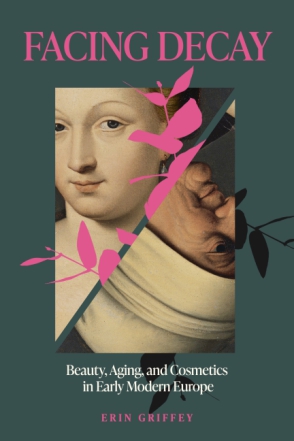
Facing Decay
Beauty, Aging, and Cosmetics in Early Modern Europe
Erin Griffey
“Facing Decay deftly navigates early modern Europe’s cosmetic landscape, shedding a new, critical light on the practices and materials of beauty regimens. Erin Griffey offers an exciting and sophisticated analysis of the cultural meanings of feminine beauty and youth, revealing that cosmetics were medical, social, and cultural agents, not mere surface adornment. Tyrannical beauty regimes, we learn, are not exclusively modern phenomena. Much was at stake when Renaissance beauty was fashioned and displayed.”
- Description
- Reviews
- Bio
- Table of Contents
- Sample Chapters
- Subjects
Facing Decay systematically examines early modern visual art, anti-aging recipes, and a range of other writings to investigate the period’s obsession with youth and beauty—and the corollary anxiety about age and decay. It provides the first examination of not only why but how early modern women sought to fight the appearance of old age. Author Erin Griffey argues that youthful skin was not simply a cosmetic pursuit; it was regarded as a signal of health, and thus beauty regimens intersected with medical practice. She takes beauty and its decay seriously and links therapeutic cosmetics to not only medical knowledge but also scientific ingenuity, social benefit, and cultural agency.
This interdisciplinary book negotiates both the representations and the practical applications of beauty culture in early modern Europe through the history of art, society, medicine, and science. It is a fascinating and frequently surprising work that should appeal to anyone interested in the history of women, aging, medicine, beauty culture, and beauty recipes.
“Facing Decay deftly navigates early modern Europe’s cosmetic landscape, shedding a new, critical light on the practices and materials of beauty regimens. Erin Griffey offers an exciting and sophisticated analysis of the cultural meanings of feminine beauty and youth, revealing that cosmetics were medical, social, and cultural agents, not mere surface adornment. Tyrannical beauty regimes, we learn, are not exclusively modern phenomena. Much was at stake when Renaissance beauty was fashioned and displayed.”
Erin Griffey is Associate Professor of Art History at the University of Auckland. She is the author of On Display: Henrietta Maria and the Materials of Magnificence at the Stuart Court and editor of Sartorial Politics in Early Modern Europe: Fashioning Women.
List of Illustrations
Acknowledgments
List of Abbreviations
Note on the Text
Introduction
1. Sourcing Beauty Secrets: Women and Bodies
of Knowledge
2. Facing Beauty and Decay: Principles and
Portrayal
3. Materializing Beauty: Ingredients,
Principles, and Patterns
4. Formulating Beauty: Processes, Formulas,
and Applications
Epilogue
Notes
Bibliography
Index
Download a PDF sample chapter here: Introduction
Also of Interest
Mailing List
Subscribe to our mailing list and be notified about new titles, journals and catalogs.