


Intersectionality as Epistemic Resistance
The Critical Theory of Patricia Hill Collins
Edited by Amy Allen and Eduardo Mendieta
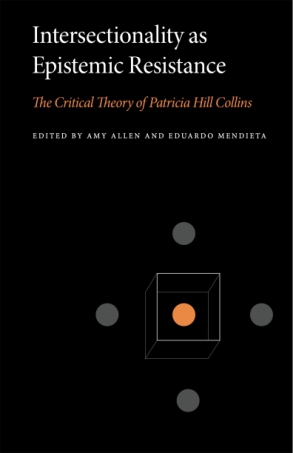
Intersectionality as Epistemic Resistance
The Critical Theory of Patricia Hill Collins
Edited by Amy Allen and Eduardo Mendieta
“This groundbreaking collection lays out in clear and bold terms the key elements for and critical insights into how domination works through interlocking systems of power. It will prove to be a valuable text for social theory and political philosophy at all levels of college and graduate education.”
- Description
- Reviews
- Bio
- Subjects
After an introduction by coeditors Amy Allen and Eduardo Mendieta situating Collins’s work within debates about intersectionality and critical theory, the volume opens with a substantial, previously unpublished essay by Collins. In it, she reflects on her intellectual and political praxis amid contemporary political turbulence, emphasizing the need to guard intersectionality against cooptation and dilution. Subsequent chapters explore how her work reshapes core concepts in critical theory, examining its relationship to the Frankfurt School and Indigenous theory as well as its significance for environmental philosophy and Black politics. The book concludes with a new essay in which Collins responds to her interlocutors and reflects on what it means to practice critical social theory at a moment when critical thought itself is under pressure.
An indispensable resource for students and scholars of critical theory, feminist philosophy, Black feminism, and intersectionality, this volume serves as a compelling introduction to Collins’s thought and its continuing relevance.
In addition to Collins and the editors, the contributors to this volume include Kanisha D. Bond, William Paris, María Pía Lara, Nancy Tuana, and Sarah Tyson.
“This groundbreaking collection lays out in clear and bold terms the key elements for and critical insights into how domination works through interlocking systems of power. It will prove to be a valuable text for social theory and political philosophy at all levels of college and graduate education.”
“Intersectionality has become a key concept in the humanities and social sciences, and this is largely thanks to the work of Patricia Hill Collins. Amy Allen and Eduardo Mendieta's volume not only reflects on the groundbreaking significance of her work for social-theoretical and philosophical analysis, explores connections between critical theories of various stripes, and opens up numerous avenues for engagement with contemporary issues but also reaffirms intersectionality's importance as a politically confrontational and transformative concept—a task that is more urgent today than ever before.”
Amy Allen is Distinguished Professor of Philosophy and Women’s, Gender, and Sexuality Studies at Penn State University.
Eduardo Mendieta (1963–2025) was Professor of Philosophy and Latino/a Studies and affiliated faculty at the School of International Affairs and in the Bioethics Program at Penn State University.
Also of Interest

Mailing List
Subscribe to our mailing list and be notified about new titles, journals and catalogs.