


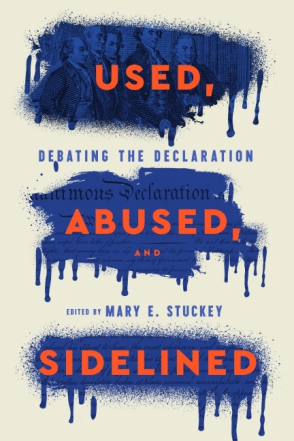
Used, Abused, and Sidelined
Debating the Declaration
Edited by Mary E. Stuckey
“These essays do more than valorize the US Declaration of Independence, they unfold its rhetorical character, probing its rhetorical and political affordances, as well as its gaps, blindnesses, and omissions. Peeling back layers of well-meaning mythology, the essays provide a balanced reckoning with a document that has shaped discourse, inside and outside the United States, for the last 250 years.”
- Description
- Reviews
- Bio
- Table of Contents
- Sample Chapters
- Subjects
In this volume, leading scholars explore how this remarkably pliable document has been used for progressive and regressive politics alike and track its impact on independence movements across the globe. The essays begin with the Declaration’s immediate reception and masculine style of prose and then move on to its central role in interpreting civic action between state and federal governments, most notably secession in the Antebellum era, questions of sovereignty between Indigenous nations in the United States, and the United States’ relationship with Latin America. The next section focuses on the ways the Declaration was called upon to urge imperative moral action, especially in terms of human rights, in the US Civil Rights Movement and the Velvet Revolution in Czechoslovakia and, in contrast, how it was cast aside in the Syrian Revolution. The final section teases out the tension between the needs reflected in the original document and the needs of the contemporary political world.
Used, Abused, and Sidelined demonstrates how this foundational document prepares us to tolerate and to resist—and it points to how we might leverage the Declaration to create a different kind of political future.
“These essays do more than valorize the US Declaration of Independence, they unfold its rhetorical character, probing its rhetorical and political affordances, as well as its gaps, blindnesses, and omissions. Peeling back layers of well-meaning mythology, the essays provide a balanced reckoning with a document that has shaped discourse, inside and outside the United States, for the last 250 years.”
“The Declaration of Independence is a document that everyone knows and few understand. This book goes wide and deep to give readers the chance to see the text for its rhetorical majesty alongside its flawed premises and failed hopes. Stuckey’s volume should be read by anyone who not only hopes to critique this essential founding document but also wonders about how it might apply to preserving democracy in the future.”
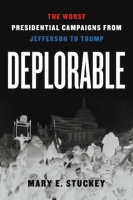
Mary E. Stuckey is Edwin Erle Sparks Professor of Communication Arts and Sciences at the Pennsylvania State University. Her most recent books are For the Enjoyment of the People: The Creation of National Identity in American Public Lands and Deplorable: The Worst Presidential Campaigns from Jefferson to Trump, the latter published by Penn State University Press.
Acknowledgments
The Declaration of Independence
Introduction | 1
Part 1 The Declaration in Its Time
1. An Appeal to the Tribunal of the World: The Reception of the Timely and Timeless Messages of the Declaration in 1776 and Beyond
Jelte Olthof
2. “An Impudent, False, and Atrocious Proclamation”: Loyalist Critique and
the Limits of Dissent in Colonial America
Stephen Howard Browne
3. A Declaration of Style: Masculinity’s Enduring Resonance
Anna M. Young
Part 2 The Sovereign Declaration
4. The Antebellum Declaration: Abolition, Secession, and Revolution
Mary E. Stuckey
5. From Declaration to Self- Determination: Decolonial Shifts in Indigenous Rhetorical Authority
Jason Edward Black
6. Declaring Economic Independence: Argentina, Juan Domingo Per.n, and Political Time
Stephen J. Heidt
7. Sovereignty Reimagined: Tropes, Sovereign Citizen Discourses, and the Declaration of Independence
Scott J. Varda
Part 3 Claims to Equality
8. We Are the True Americans: The Declaration of Independence and Radical, Anti- capitalist, Working- Class Movements
Mary Anne Trasciatti
9. The Declaration of Independence and Civil Rights: The Long Movement and Countermovement
Davis W. Houck
10. From Black Lives Matter to the Syrian Revolution: How Do
“We the People” Render Our Struggles Visible?
Noor Ghazal Aswad
11. A Morally Grounded Ideograph: V.clav Havel’s Constitutive Rhetoric in the Velvet Revolution
Rebecca Oliver
Part 4 The Semi- sacred Declaration
12. “That Was the First Time in History That Anyone Bothered to Write That Down”: Mythologizing the Declaration of Independence in The West Wing
Christopher J. Wernecke and Ann E. Burnette
13. Proximate Deliberation and the 1776 Moment: The Proud Boys’ and
Oath Keepers’ Use of the Declaration of Independence
Leslie A. Hahner
14. From Cultural Artifact to Culture War: The Declaration of Independence and the Fight for Control of the US Civics Classroom
Mark Hlavacik
15. Borrowing Trouble? The Declaration’s Threshold of Suffering and Care
Brandon Inabinet
List of Contributors
Index
Download a PDF sample chapter here: Introduction
Also of Interest

Mailing List
Subscribe to our mailing list and be notified about new titles, journals and catalogs.