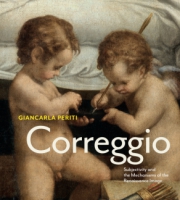



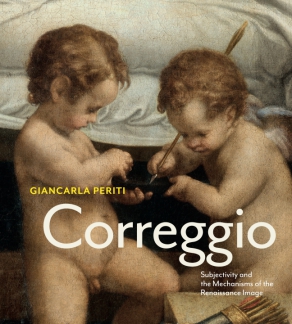
Correggio
Subjectivity and the Mechanisms of the Renaissance Image
Giancarla Periti
“Periti thoughtfully reconsiders some of the best-known paintings by Correggio in an effort to reposition the artist—who has long been sidelined as a provincial painter—as a creative and dynamic contributor to cinquecento art making and to the experience of the image. Beautifully written and expertly researched.”
- Description
- Reviews
- Bio
- Table of Contents
- Subjects
In this long-awaited study, Giancarla Periti reconsiders both the central subjects and the margins of Correggio’s paintings, revealing borders as active sites where narratives unfold beyond the frame, engaging space and beholder in unprecedented ways. This book attends closely to the facture of Correggio’s pictures; his experiments with pigments, supports, and surfaces; and his refined blending of brushstrokes, light, and color. These choices generated striking sensory effects that invite viewers into tactile, optical, and even auditory experiences. At the same time, Correggio emerges as a self-aware artist, deeply engaged in contemporary theoretical debates and in shaping an artistic persona that matched his technical and imaginative daring.
By foregrounding Correggio’s agency and experimentation, this book complicates traditional readings of Renaissance art and expands the geography of artistic modernity beyond Rome, Florence, and Venice. It will be of particular interest to scholars of early modern Italian art and culture, students of the Renaissance, and readers drawn to the innovations of Old Master painting.
“Periti thoughtfully reconsiders some of the best-known paintings by Correggio in an effort to reposition the artist—who has long been sidelined as a provincial painter—as a creative and dynamic contributor to cinquecento art making and to the experience of the image. Beautifully written and expertly researched.”
“Few before Giancarla Periti have come to grips with the artist’s radical departures from the conventions of Renaissance composition, especially in his altarpieces. Particularly welcome too, is the novel discussion of Correggio’s ‘medievalism,’ his attention to Byzantine models accessible to him from the Cassinese network. A particularly perceptive and original chapter shows the painter’s approach to medium and support and his capacity to mobilize facture, colored grounds, and varnishes to enhance the psychological impact of a work.”
Giancarla Periti is Professor in the Department of Art History at the University of Toronto. She is the author of In the Courts of Religious Ladies: Art, Vision, and Pleasure in Italian Renaissance Convents and has coedited several volumes, including Ravenna in the Imagination of Renaissance Art and The Network of Cassinese Arts in Renaissance Italy.
List of Illustrations
Acknowledgments
Introduction
1 Frames and Edges of the Premodern Image
2 Correggio’s Murals: Vision, Sound, and the Potency of Illusionism
3 Correggio’s Loves of Jupiter: Soft Eroticism, Politics, and the Artist’s Imagination
4 Mindful Hands and Materials
Epilogue
Notes
References
Index
Also of Interest
Mailing List
Subscribe to our mailing list and be notified about new titles, journals and catalogs.